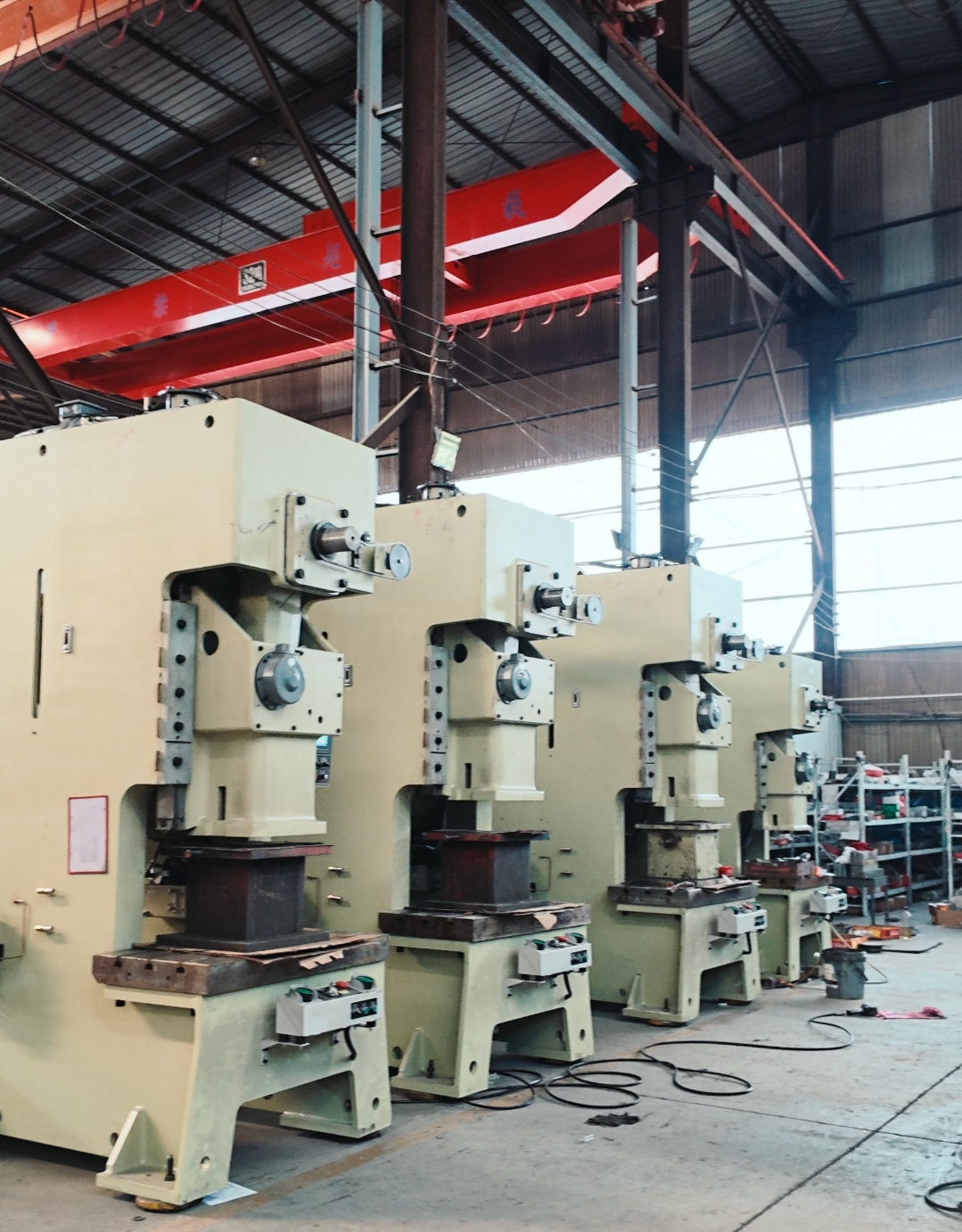
Welcome to Shandong Fuxing Machinery Co., Ltd.
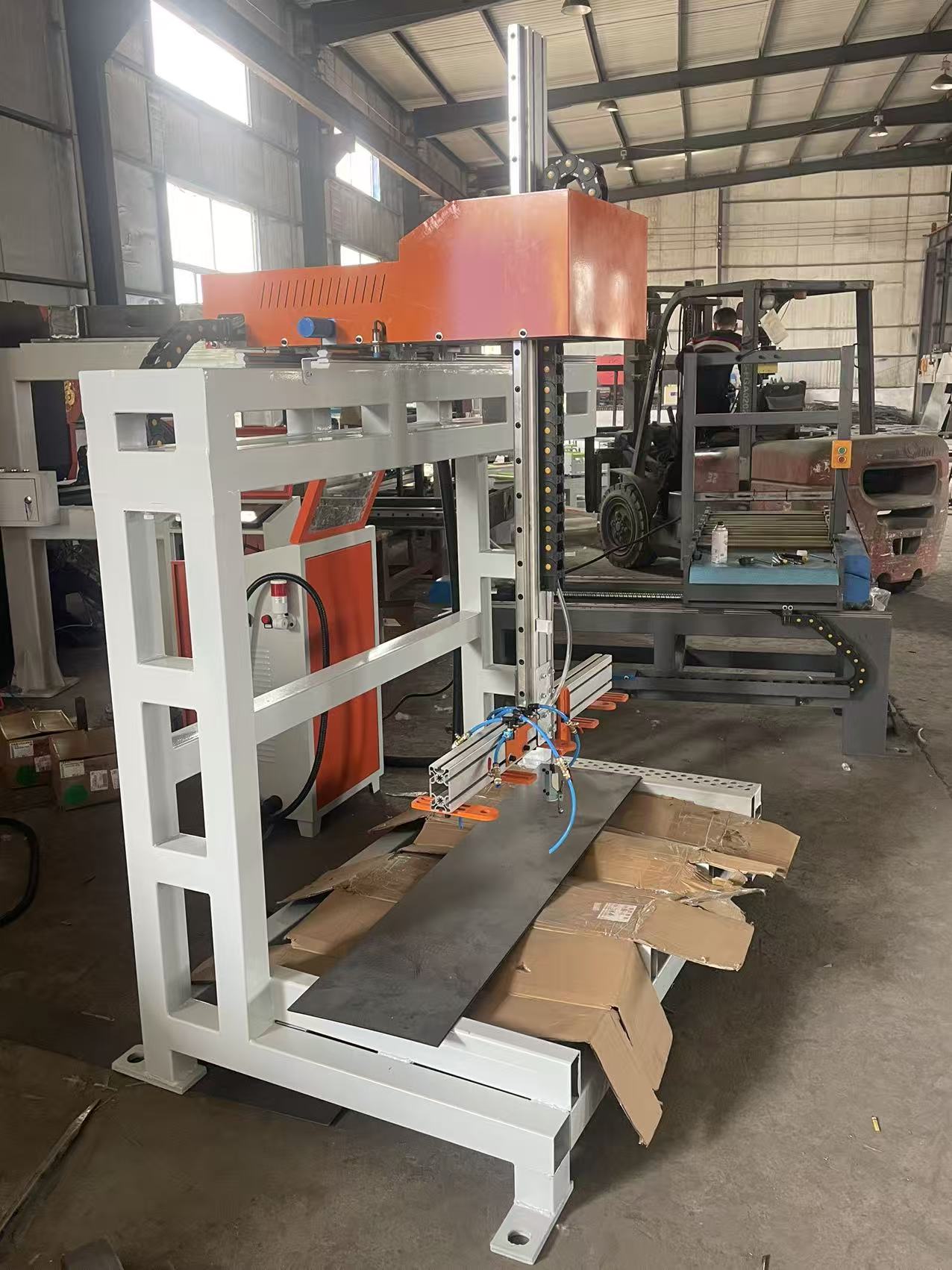
Vision Feeding Machine + Press Machine: Upgrading Stamping from Automatic Feeding to Intelligent Pos
In traditional stamping production, a feeder has one primary job: feeding material into the press at a preset distance.
But when products have complex shapes, irregular positioning, different orientations, or require high-precision positioning, conventional feeding alone may not be enough.
This is where a Vision Feeding Machine combined with a stamping press can provide a major advantage.
By integrating industrial cameras, vision recognition software, automatic positioning mechanisms, and the press control system, a vision feeding system can do much more than simply feed parts. It can identify the position and orientation of a workpiece, correct its position, and accurately place it into the stamping die.
The result is a more flexible, efficient, and intelligent automated stamping process.
What Is a Vision Feeding Machine?
A Vision Feeding Machine is an intelligent feeding system that combines machine vision technology with automatic feeding equipment.
Unlike conventional feeders that operate according to a fixed feeding distance, a vision feeding system uses industrial cameras to capture the actual position and condition of each workpiece.
The vision system can identify:
Workpiece position
Rotation angle
Orientation
Quantity
Shape and contour
Specific positioning points
Based on the recognition results, the system calculates the actual coordinates of the workpiece and controls the feeding mechanism to pick, move, orient, and position it accurately.
In simple terms:
Conventional Feeder
Feed the material according to a preset distance.
Vision Feeding System
See the workpiece, identify its position and orientation, and accurately place it where it needs to go.
This makes vision feeding particularly suitable for irregular parts, randomly positioned workpieces, precision components, and multi-product production.
What Can a Vision Feeding Machine + Press Machine Do?
The biggest value of vision feeding is not simply replacing manual feeding.
It allows a stamping press to handle more complex and flexible production tasks.
1. Automatically Identify Workpiece Position
In conventional production, operators often need to manually place each workpiece in a specific position.
If the workpiece is misaligned, it can result in:
Incorrect stamping position
Inconsistent product dimensions
Die damage
Increased scrap rates
A vision system can identify the actual position of the workpiece and transmit its coordinates to the feeding system.
Even when the workpiece is not placed perfectly, the system can automatically locate and position it.
Manual positioning becomes automatic visual positioning.
2. Automatically Identify Orientation and Angle
For round parts, irregular parts, stamped components, or products with directional features, workpieces may enter the feeding area in different orientations.
The vision system can determine the current rotation angle and allow the feeding mechanism to automatically correct the orientation.
The process can be:
Workpiece enters → Vision recognition → Angle detection → Automatic orientation correction → Accurate positioning → Stamping
This significantly reduces manual positioning and orientation adjustments.
3. Precise Positioning Before Stamping
When combined with a high-precision stamping press, a vision feeding system can provide:
Vision Recognition + Precision Positioning + Automatic Feeding + Stamping
For products requiring accurate stamping locations, the vision system can perform position compensation before feeding the workpiece into the die.
This is especially useful for:
Multi-hole stamping
Irregular-shaped parts
Precision components
Multi-stage stamping
Non-standard workpieces
Flexible Stamping for Multiple Products
One of the key advantages of vision feeding is flexibility.
Traditional stamping lines are often designed around a fixed production process:
Fixed Material → Fixed Feeding Distance → Fixed Die → Fixed Product
When the product size or shape changes, the feeding system may need to be manually adjusted.
A vision-based system provides much greater flexibility.
By changing the vision parameters and production program, the system can adapt to different:
Product sizes
Shapes
Orientations
Arrangements
This allows one automated feeding system to support multiple products.
For manufacturers handling high-mix, low-volume production, this flexibility can be particularly valuable.
Vision Systems Can Also Support Product Inspection
A vision system can do more than simply locate a workpiece.
It can also be used to inspect products during the stamping process.
For example, the system can detect:
Whether a workpiece is present
Whether the workpiece is correctly positioned
Whether the orientation is correct
Whether obvious defects are present
Whether holes are correctly positioned
Whether a required stamping operation has been completed
When an abnormal condition is detected, the system can send a signal to the press control system to stop production or trigger an appropriate response.
This creates an integrated process:
Recognition → Positioning → Stamping → Inspection
The vision system therefore becomes more than a feeding device. It becomes an important intelligent recognition and control component within the automated stamping line.
How Does Vision Feeding Reduce Manual Labor?
In conventional stamping production, operators may repeatedly perform:
Pick Up → Position → Align → Stamp → Remove → Repeat
Continuous repetitive work can limit productivity and may be affected by operator fatigue and positioning inconsistencies.
A vision-based automation system can reduce these repetitive operations.
The production process can be upgraded to:
Loading → Vision Recognition → Automatic Positioning → Automatic Feeding → Stamping → Automatic Unloading
Operators can spend less time on repetitive feeding and positioning and focus more on:
Material loading and unloading
Equipment monitoring
Quality inspection
Die maintenance
Production management
This can improve labor utilization and overall production efficiency.
Key Advantages of Vision Feeding
1. High Flexibility
Conventional feeders are ideal for standardized products with fixed feeding pitches.
Vision feeding is better suited to:
Multiple products, multiple specifications, and irregular-shaped parts.
2. High Positioning Accuracy
The vision system can identify the actual position and angle of a workpiece and perform coordinate compensation.
For products requiring precise positioning, this can reduce manual errors and improve product consistency.
3. Reduced Dependence on Manual Labor
Automatic recognition, positioning, and feeding can significantly reduce manual loading and alignment work.
This is particularly valuable for:
High-volume production
Continuous production
Repetitive manufacturing processes
Production environments with rising labor costs
4. Higher Production Efficiency
Automation reduces manual loading, positioning, and waiting time.
When the vision system, feeder, and press operate together, they can create a continuous production process and improve equipment utilization.
5. Better Product Consistency
Manual positioning can vary from one cycle to another.
A vision system follows standardized recognition and positioning rules, reducing human-related variation and helping maintain consistent product quality.
6. Easy Integration with Automated Production Lines
A vision feeding system can be integrated with:
Stamping presses
Stamping dies
Automatic loading systems
Automatic unloading systems
Conveyors
Robotic handling systems
Product inspection systems
A complete automated process can therefore be created:
Automatic Loading → Vision Recognition → Precision Feeding → Stamping → Automatic Inspection → Automatic Unloading
What Products Are Suitable for Vision Feeding?
Vision feeding is not necessary for every stamping application.
For conventional coil-fed stamping, where the material is arranged regularly and the feeding pitch is fixed, an NC servo feeder or conventional servo feeder may already provide the required performance.
Vision feeding is particularly suitable for applications involving:
Irregular-Shaped Parts
Products with complex or irregular contours that cannot be easily positioned using a simple fixed feeding method.
Multiple Product Types
A single production line needs to process products with different sizes or shapes.
Precision Stamping Parts
Products requiring high positioning accuracy, precise hole locations, or consistent orientation.
Randomly Positioned Workpieces
Workpieces enter the feeding area without a fixed position or orientation and need to be recognized automatically.
Applications Requiring Automatic Inspection
The system needs to identify, position, feed, and inspect products as part of the same production process.
Production with High Labor Costs
Manufacturers want to reduce repetitive manual loading, positioning, and feeding operations.
Vision Feeding + Press Machine = A Complete Automation Solution
The real value of stamping automation is not simply adding an automatic feeder to a press.
The key is to make the entire production process work together.
For example, a complete vision-based stamping production line can operate as follows:
01 — Automatic Loading
Raw materials or workpieces enter the feeding area.
↓
02 — Vision Recognition
Industrial cameras identify the workpiece position, orientation, and angle.
↓
03 — Automatic Positioning
The system calculates the coordinates and controls the feeding mechanism to correct the position.
↓
04 — Precision Feeding
The workpiece is accurately placed into the stamping die.
↓
05 — Stamping
The press performs punching, forming, cutting, bending, or other required operations.
↓
06 — Product Inspection
The vision system checks the stamped product according to predefined inspection criteria.
↓
07 — Automatic Unloading
Qualified products are transferred to the next process, while defective products can be separated automatically.
This creates a production line capable of:
Automatic Loading → Intelligent Recognition → Precision Positioning → Stamping → Inspection → Unloading
Why Should You Design the Vision Feeding System Together with the Press?
The performance of a vision feeding system depends on much more than the feeder itself.
The complete solution needs to consider:
Product type
Material
Product dimensions
Stamping processes
Required production capacity
Press tonnage
Die structure
Feeding method
Positioning accuracy
Production cycle time
Required level of automation
Therefore, instead of selecting a vision feeder separately, it is often more effective to design the press, feeder, die, vision system, and automation equipment as one complete solution.
The right automation system should start with the product.
What are you producing?
What material are you using?
What are the product dimensions?
What stamping operations are required?
What production capacity do you need?
These factors determine the most suitable stamping and automation configuration.
From One Press to a Complete Automated Stamping Line
The goal of stamping automation is not simply to make a machine feed material automatically.
The real goal is to enable the production system to:
Recognize → Position → Feed → Stamp → Inspect → Unload
with minimal manual intervention.
A vision feeding machine gives a stamping press greater recognition capability, positioning accuracy, and production flexibility.
When the vision system, press, feeder, dies, and automation equipment are integrated into one system, a single stamping machine can be upgraded into a complete intelligent stamping production line.
Fuxing Machinery — From Press Machines to Complete Stamping Solutions
At Fuxing Machinery, we don't only provide stamping presses.
Based on your product, dimensions, material, production process, and required output, we can help configure press machines, feeding systems, dies, vision systems, and automation equipment to create a complete metal stamping solution.
Tell us what you want to produce.
We design the stamping solution around your product.