Welcome to Shandong Fuxing Machinery Co., Ltd.
What Determines Stamping Accuracy? Key Factors Affecting Power Press Accuracy
In metal stamping, press capacity and stamping speed are not the only factors that determine production quality.
For applications requiring consistent dimensions, stable production, and reliable product quality, power press accuracy is equally important.
A press may have sufficient tonnage for a particular application, but if the slide lacks proper movement accuracy, the slide-to-table parallelism is not adequately controlled, or the machine structure deforms excessively under load, the die alignment and final stamping results may be affected.
So, what determines the accuracy of a power press?
1. Slide Vertical Accuracy
Slide movement accuracy is one of the foundations of press accuracy.
During stamping, the slide must move vertically and consistently along its guiding system. Excessive deviation can affect the alignment between the upper die, lower die, and worktable.
For precision stamping applications, slide vertical accuracy must be properly adjusted and inspected during the manufacturing and assembly process.
Only after the required vertical accuracy has been achieved can further parallelism adjustment be carried out.
2. Slide Parallelism
Vertical movement accuracy is not the only consideration.
The parallelism between the slide and worktable is also important.
If the slide is not sufficiently parallel to the worktable, the die may experience uneven loading during stamping. This can affect product consistency and die service life.
Slide parallelism can affect:
Product dimensional consistency
Die loading conditions
Stamping quality
Die wear
Continuous production stability
Therefore, slide parallelism is an important parameter when evaluating the accuracy of a power press.
During the assembly of Fuxing Machinery presses, the slide vertical accuracy is adjusted first. After the required accuracy is achieved, the slide parallelism is then finely adjusted and ground.
The worktable is installed after the relevant accuracy requirements have been achieved.
This means that the worktable is not simply installed as an independent assembly step. Its installation follows the preceding precision adjustment process.
3. Press Frame Rigidity
During stamping, the press must withstand substantial working forces.
The press frame and its major structural components are subjected to these loads. If the machine does not have sufficient rigidity, excessive structural deformation may occur during stamping, affecting the relative position of the slide, die, and worktable.
Therefore, when selecting a power press, it is not enough to ask:
"How many tons is the press?"
It is also important to consider:
"How well can the machine maintain stability under stamping load?"
This is particularly important for precision stamping, continuous production, and applications using larger dies.
4. Slide Guiding System
The slide guiding system controls the movement path of the slide.
A well-designed guiding system helps maintain stable vertical movement and minimize unwanted deviation, supporting consistent alignment between the upper and lower dies during stamping.
The design of the guiding system, machining accuracy, assembly quality, and maintenance can all affect the long-term stability of slide movement.
This becomes especially important for stamping factories running presses continuously for extended production cycles.
5. Die Installation and Alignment
A high-precision power press does not automatically guarantee high-precision stamping.
This is because the press is only one part of the complete stamping system.
The press, die, material, and feeding system must work together properly.
If the die is incorrectly installed or the upper and lower dies are not properly aligned, the final product may still be affected even when the press itself has good mechanical accuracy.
Therefore, proper die installation, adjustment, and alignment are also essential for precision stamping.
For automated stamping lines, feeder accuracy is equally important. The material must be positioned accurately before each stamping cycle to maintain consistent production.
6. The Assembly Process Also Matters
Press accuracy is not determined only by the machine design or the accuracy of individual components.
The assembly process also has a direct impact on the final machine accuracy.
A precision power press requires multiple adjustment, inspection, and machining operations. These processes are interconnected, which means the sequence of precision adjustments is also important.
A typical precision adjustment process may include:
Press assembly → slide vertical accuracy adjustment → slide parallelism adjustment → precision grinding → worktable installation → no-load running test → stamping simulation → final inspection
Therefore, when selecting a power press, comparing only a few specifications in a product catalog may not provide a complete picture of the machine's actual manufacturing quality.
Specifications matter, but the manufacturing and inspection processes behind those specifications matter as well.
7. How Does Press Accuracy Affect Production?
Stable press accuracy helps maintain a consistent working relationship between the press, die, and material.
For stamping manufacturers, this can contribute to:
More consistent product dimensions
Better product consistency
More stable continuous stamping
Reduced production variation caused by machine accuracy
Better suitability for precision stamping applications
Better integration with automatic feeding and automation systems
However, final stamping accuracy is not determined by the press alone.
Material thickness and properties, die design, die accuracy, feeding accuracy, lubrication, and stamping parameters can all affect the final product.
Therefore, stamping accuracy is the result of the entire production system working together.
How to Choose a Power Press for Precision Stamping
If your products have high requirements for dimensional consistency and production stability, it is not recommended to focus only on tonnage and speed when selecting a press.
Consider the following factors together:
1. Slide Vertical Accuracy
Can the slide maintain a stable movement path during operation?
2. Slide Parallelism
How well is the slide aligned with the worktable? Has the parallelism been properly adjusted and inspected?
3. Press Frame Rigidity
Can the machine maintain structural stability under actual stamping loads?
4. Guiding System
What type of slide guiding structure is used? Can it maintain stable movement during continuous operation?
5. Assembly Process
Are precision adjustments and inspections carried out during machine assembly?
6. Final Testing
Does the completed machine undergo running tests, stamping simulations, and relevant accuracy inspections?
7. Production Requirements
Are the press tonnage, table size, throat depth, stroke, speed, and feeding method suitable for your products and dies?
Precision Is More Than a Specification
For a power press, precision is not simply a number listed in a product specification sheet.
It comes from:
Structural design, component machining, assembly, precision adjustment, grinding, inspection, and final testing.
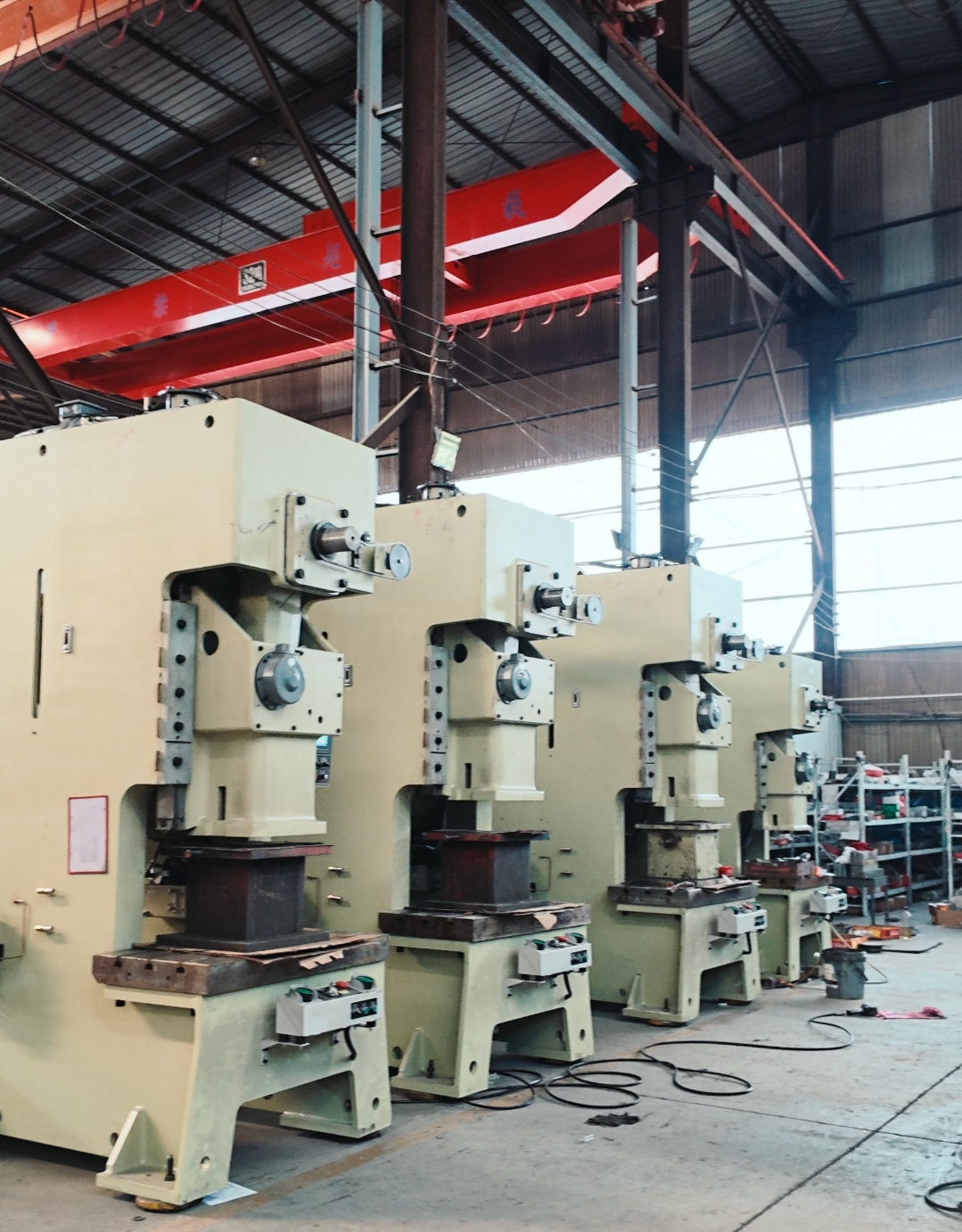
At Fuxing Machinery, we focus not only on the final specifications of our presses, but also on how those specifications are achieved throughout the manufacturing process.
From slide vertical accuracy adjustment and slide parallelism adjustment to worktable installation, no-load running tests, and stamping simulations, each stage contributes to the final performance of the machine.
Because true precision is not just written in a specification sheet. It is built into every step of the manufacturing process.
From a Single Press to a Complete Metal Stamping Solution
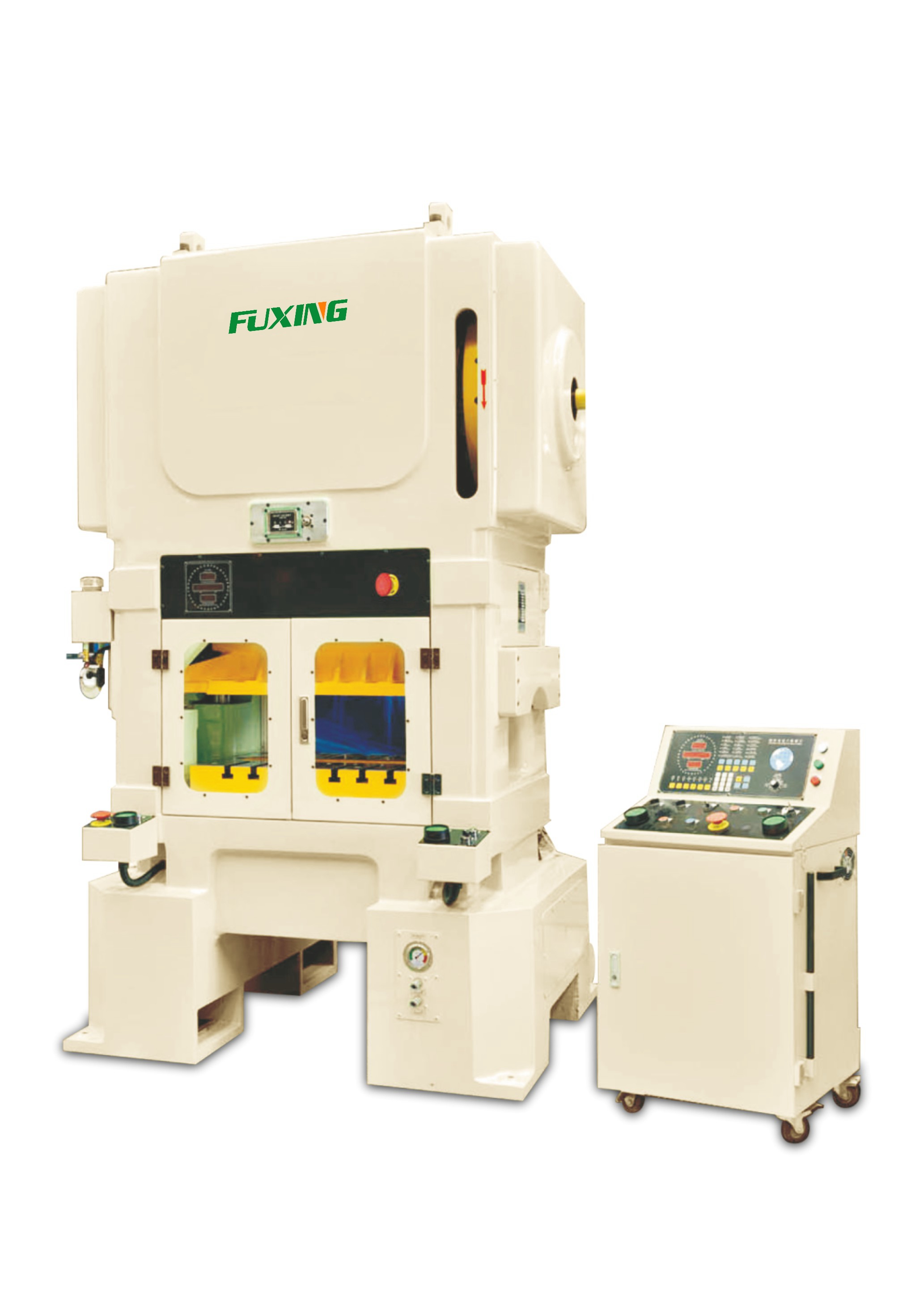
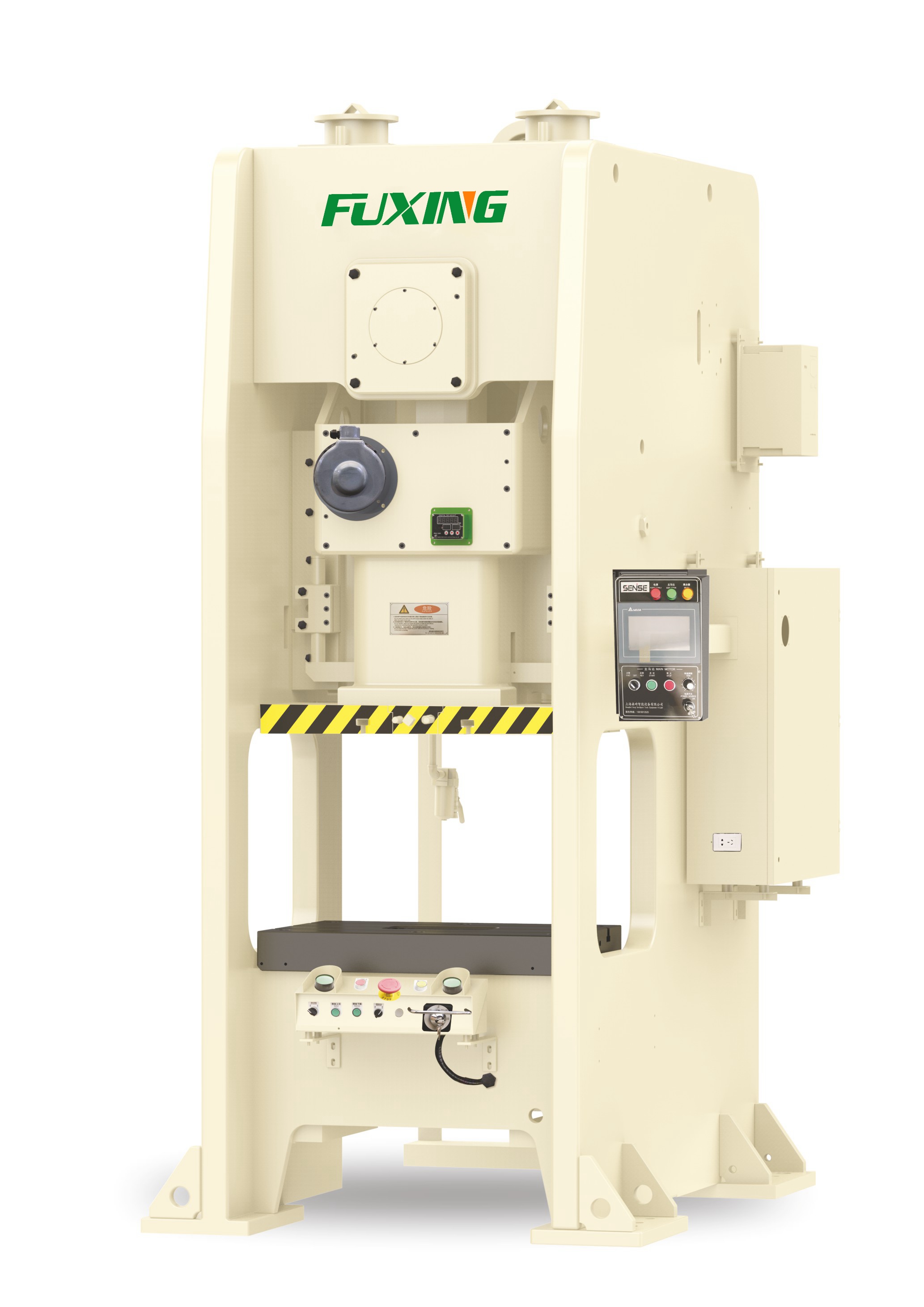
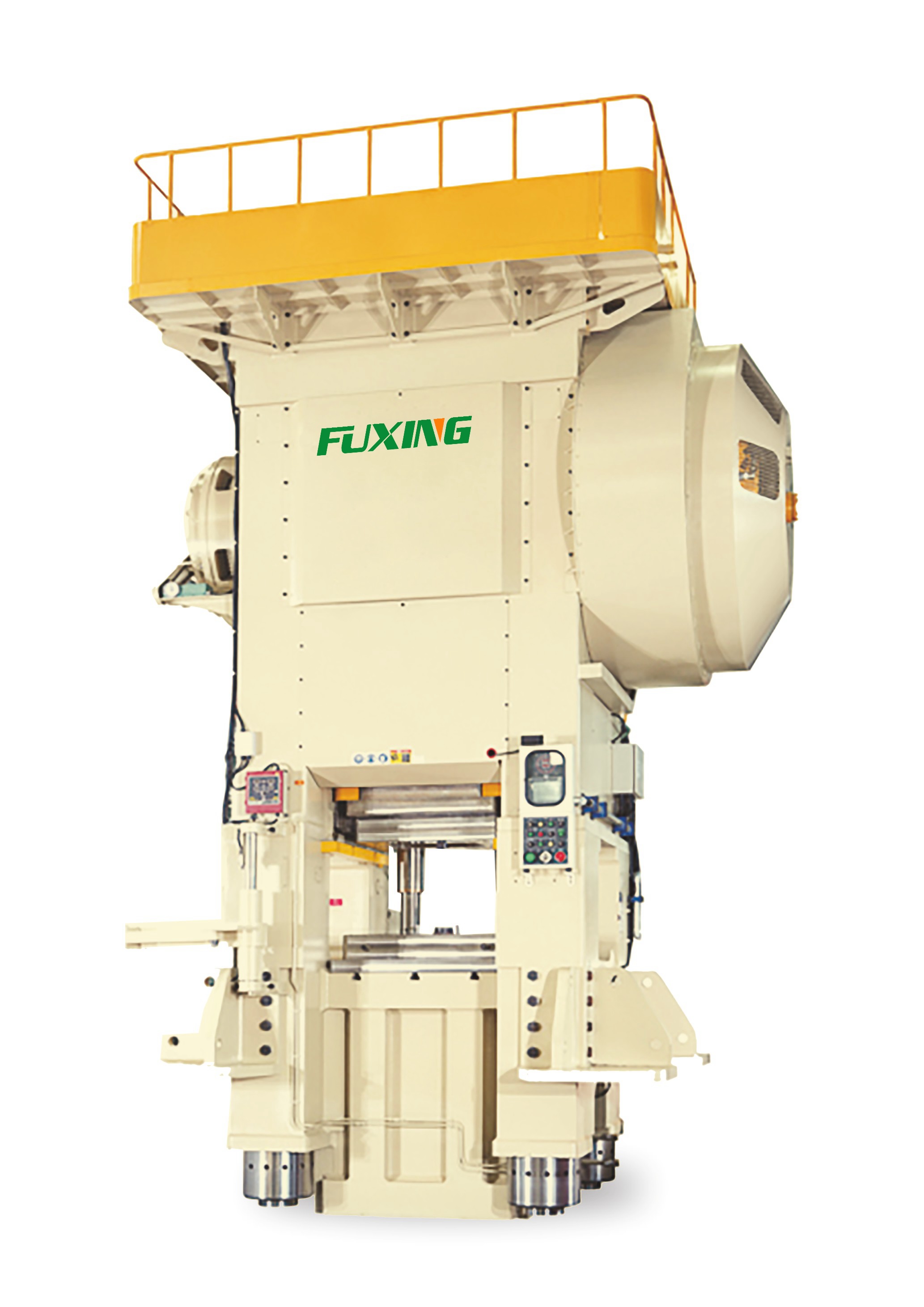
Fuxing Machinery supplies C-frame and H-frame power presses for different metal stamping applications. Standard configurations are available, with customized parameters provided when required by the production process.
Depending on the application, the press can also be integrated with feeding equipment, dies, and other automation systems to develop a complete metal stamping solution.
From a single press to a complete metal stamping solution.