Welcome to Shandong Fuxing Machinery Co., Ltd.
Power Press and Flat Washer Stamping
How a Small Component Relies on Precision Metal Stamping Technology
Flat washers may appear to be simple components, but they play a critical role in countless industrial applications. From automotive manufacturing and construction projects to electrical equipment and machinery assembly, flat washers are essential for ensuring secure and reliable fastening.
Behind every high-quality flat washer is a precision stamping process powered by advanced press machines and tooling systems. In this article, we will explore the function of flat washers, their manufacturing process, and the important role that power presses play in efficient washer production.
What Is a Flat Washer?
A flat washer is a thin metal disc with a center hole, typically installed between a bolt or nut and the surface of a workpiece.
Its primary functions include:
Load Distribution
Flat washers increase the contact area between the fastener and the workpiece, helping distribute pressure evenly and prevent surface damage.
Preventing Loosening
When used together with lock washers or other fastening components, flat washers help improve joint stability.
Surface Protection
They prevent bolts and nuts from directly contacting and damaging the material surface.
Gap Compensation
Washers can also be used to compensate for dimensional tolerances during assembly.
Common materials include:
Carbon Steel
Stainless Steel 304
Stainless Steel 316
Galvanized Steel
Copper
Aluminum
Depending on the application, washer thicknesses typically range from 0.5 mm to 10 mm.
How Are Flat Washers Manufactured?
Although a flat washer appears simple, industrial production requires strict control over:
Outer Diameter Accuracy
Inner Hole Accuracy
Concentricity
Flatness
Burr Height
The most common manufacturing method is:
Power Press + Stamping Die + Automatic Feeding System
The production process generally consists of the following steps:
Step 1: Material Preparation
The production process begins with selecting suitable raw materials.
Common materials include:
SPCC Cold-Rolled Steel
Stainless Steel 304
Galvanized Steel Sheet
Material thicknesses typically range from:
0.5 mm to 6 mm
depending on product specifications.
Step 2: Automatic Feeding
Coil material is loaded onto a decoiler and fed through:
Decoiler
Straightener
NC Servo Feeder
The material is then automatically delivered into the stamping die.
Compared with manual feeding, automated feeding offers:
Higher productivity
Better consistency
Improved safety
Reduced labor costs
It also enables continuous 24-hour production.
Step 3: Piercing the Center Hole
The first stamping operation creates the washer's inner hole.
For example, a washer with:
Outer Diameter: 56 mm
Inner Diameter: 31 mm
requires the center hole to be punched first.
At this stage, die clearance is critical.
Excessive clearance may cause:
Large burrs
Poor edge quality
Insufficient clearance may lead to:
Punch damage
Increased tool wear
Step 4: Blanking the Outer Diameter
The second operation cuts the outside diameter to create the finished washer shape.
For mass production, piercing and blanking are often combined in a progressive die system.
This allows one complete washer to be produced with every press stroke.
Step 5: Inspection and Packaging
Finished washers undergo quality inspection, including:
Outer Diameter Measurement
Inner Diameter Measurement
Thickness Verification
Flatness Inspection
Burr Height Inspection
Products that meet quality standards are then packaged and prepared for shipment.
Why Are Power Presses Essential for Flat Washer Production?
Flat washers are typical sheet metal stamping parts characterized by:
Large Production Volumes
High Dimensional Accuracy Requirements
Low Unit Cost
As a result, manufacturers require highly efficient production equipment.
Power presses provide several advantages.
High Production Efficiency
Standard pneumatic presses typically operate at:
30–80 strokes per minute (SPM)
High-speed presses can achieve:
200–1000+ SPM
making them ideal for large-scale washer production.
Excellent Dimensional Consistency
Precision dies and stable press operation ensure highly consistent product dimensions.
Compared with cutting or machining methods, stamping offers superior repeatability.
Lower Production Cost
Stamping provides:
High material utilization
Reduced labor requirements
Low cost per piece
making it one of the most economical manufacturing methods.
Automation Compatibility
Modern presses can be integrated with:
Decoilers
Straighteners
NC Servo Feeders
Transfer Systems
Industrial Robots
Vision Inspection Systems
to create fully automated production lines.
Which Type of Press Is Best for Flat Washer Stamping?
The ideal press depends on product size, thickness, and production requirements.
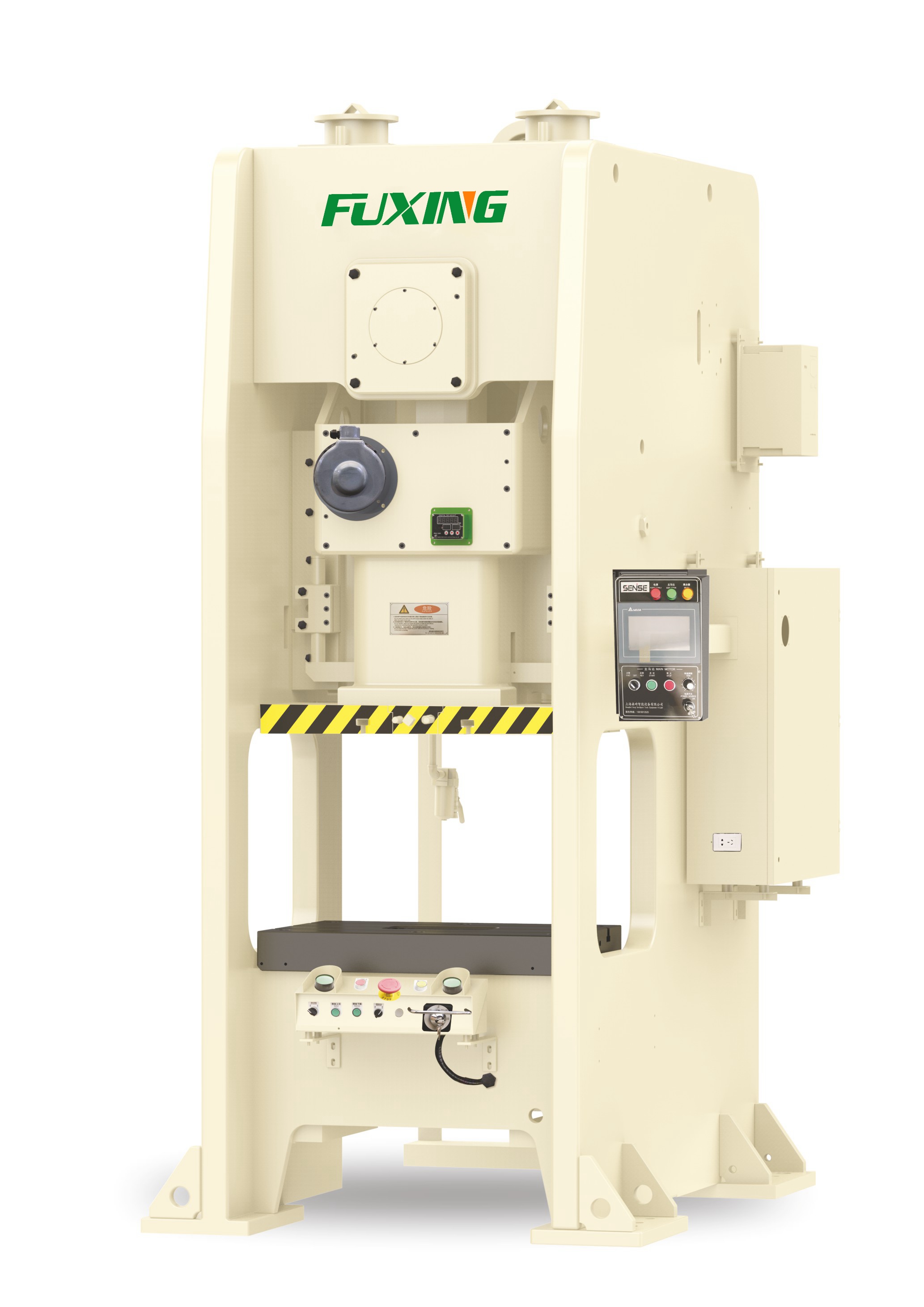
C-Frame Pneumatic Press
Suitable for:
Small and Medium-Sized Washers
General Stamping Applications
Advantages:
Easy Operation
Compact Footprint
Cost-Effective Investment
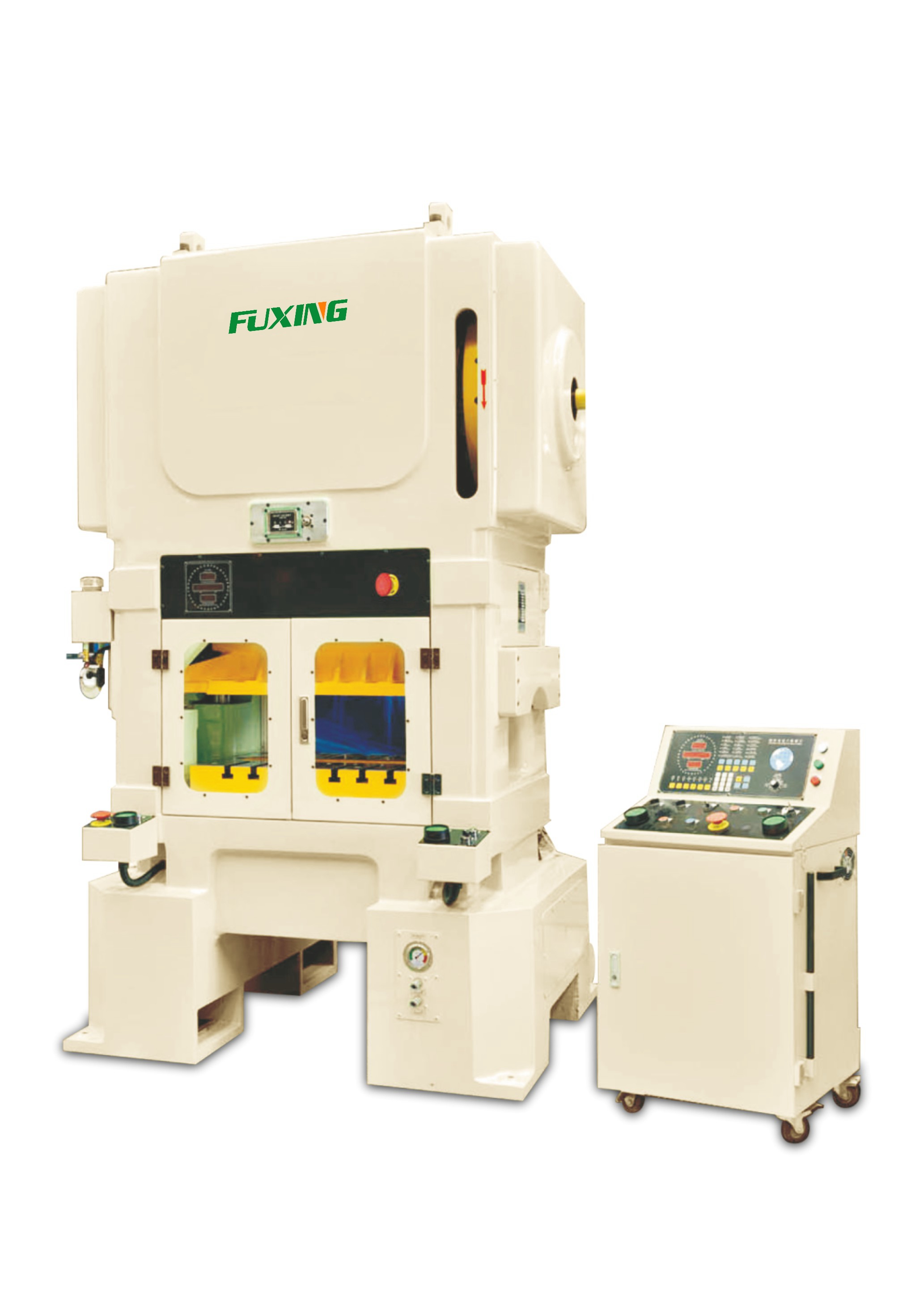
H-Frame Pneumatic Press
Suitable for:
Thick Material Stamping
Large-Diameter Washers
High-Precision Applications
Advantages:
Superior Rigidity
Reduced Deflection
Better Accuracy
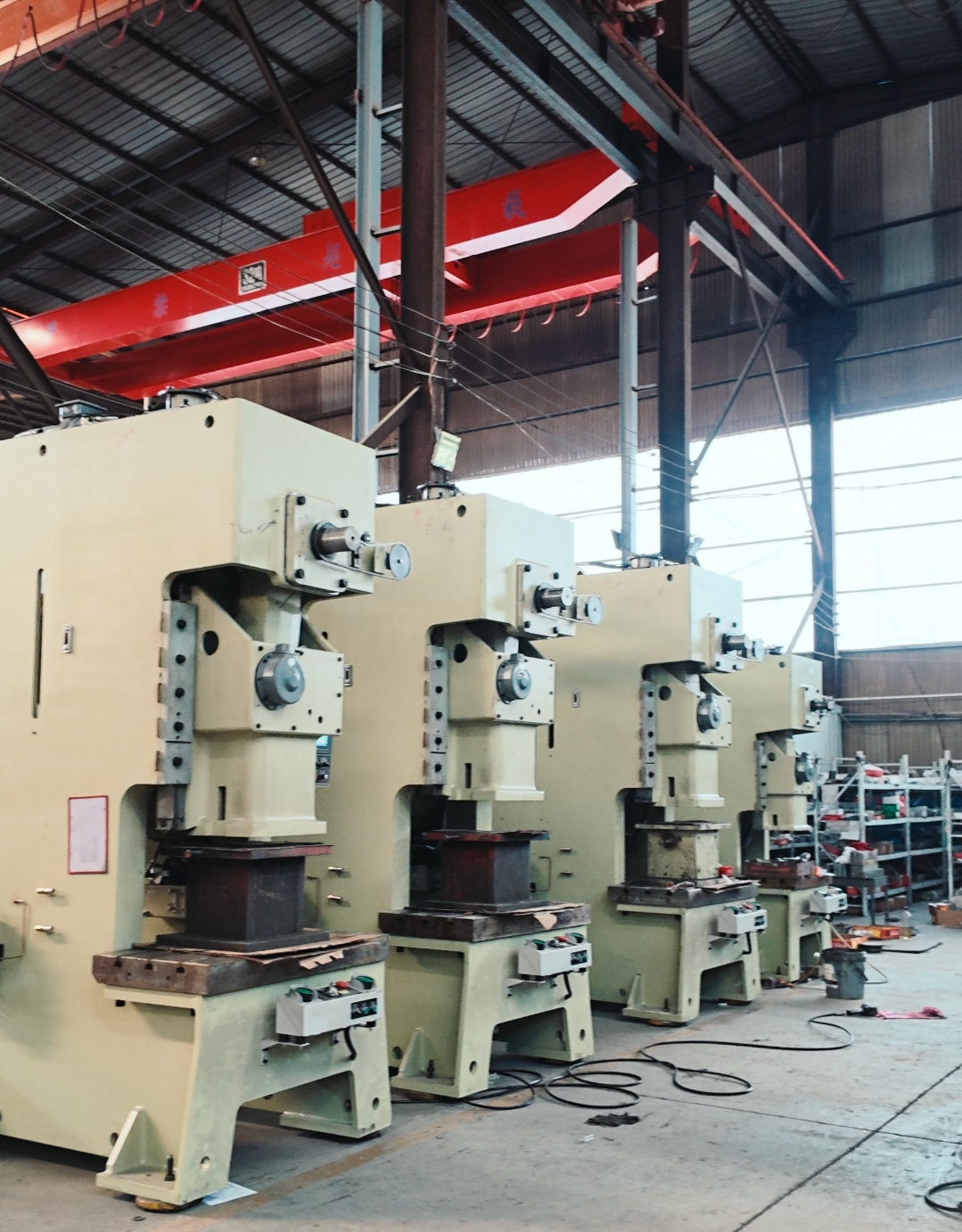
Single-Crank Press
Suitable for:
Standard Washer Production
Conventional Blanking Operations
Offers excellent efficiency for most stamping applications.
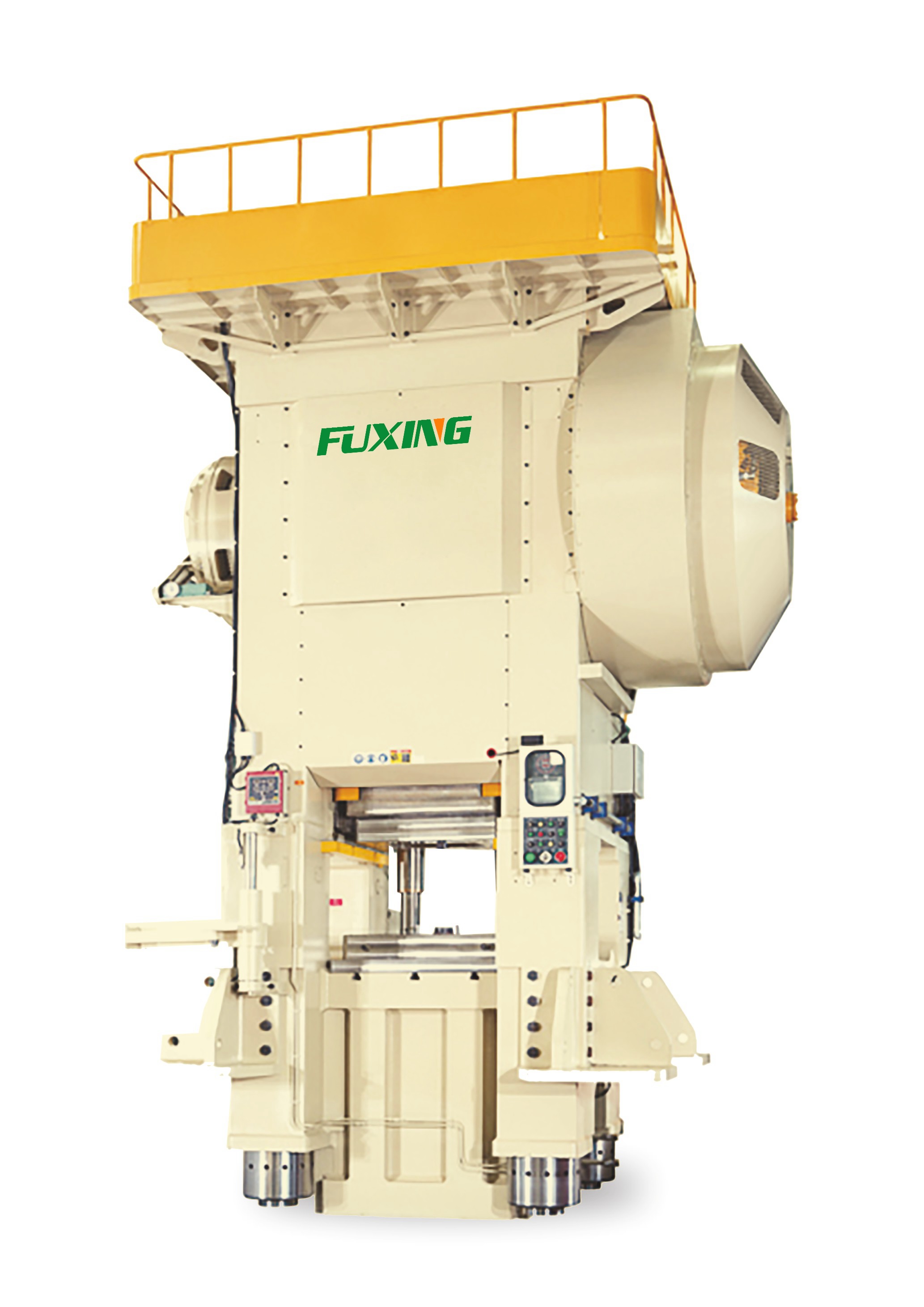
Double-Crank Press
Suitable for:
Wide Dies
Large Workpieces
Provides more balanced force distribution and improved stability.
How Does a High-Precision Press Improve Washer Quality?
Manufacturers often encounter problems such as:
Excessive Burrs
Inconsistent Dimensions
Short Die Life
Poor Flatness
While tooling quality is important, press accuracy also plays a critical role.
A high-precision press provides:
Stable Slide Motion
Reduces off-center loading and improves cutting quality.
Superior Guiding Accuracy
Maintains excellent concentricity between the inner hole and outer diameter.
High Frame Rigidity
Minimizes deformation during stamping.
Accurate Bottom Dead Center Positioning
Ensures consistent dimensions from part to part.
These factors directly contribute to higher-quality washer production.
The Future of Automated Flat Washer Production
As labor costs continue to rise, more manufacturers are investing in fully automated stamping systems.
A typical automated washer production line includes:
Decoiler
Straightener
NC Servo Feeder
APA Series Pneumatic Press
Automatic Collection System
Vision Inspection System
The entire line can perform:
✓ Automatic Feeding
✓ Automatic Stamping
✓ Automatic Inspection
✓ Automatic Part Collection
resulting in higher productivity, lower operating costs, and improved product consistency.
Conclusion
Although flat washers are small and inexpensive components, they are indispensable in industries such as automotive manufacturing, construction, electrical equipment, machinery, and industrial assembly.
Efficient and reliable washer production depends on advanced stamping technology and high-precision power presses.
As a professional power press manufacturer, FUXING MACHINERY provides:
C-Frame Presses
H-Frame Presses
Single-Crank Presses
Double-Crank Presses
Customized Stamping Solutions
Complete Coil Feeding Systems
Automated Metal Stamping Production Lines
We are committed to helping manufacturers improve productivity, precision, and profitability through reliable metal forming solutions.
For more information, visit:
and discover how our stamping solutions can support your production needs.