Welcome to Shandong Fuxing Machinery Co., Ltd.
Pneumatic Power Press: Pros & Cons
1. What Is a Pneumatic Power Press?
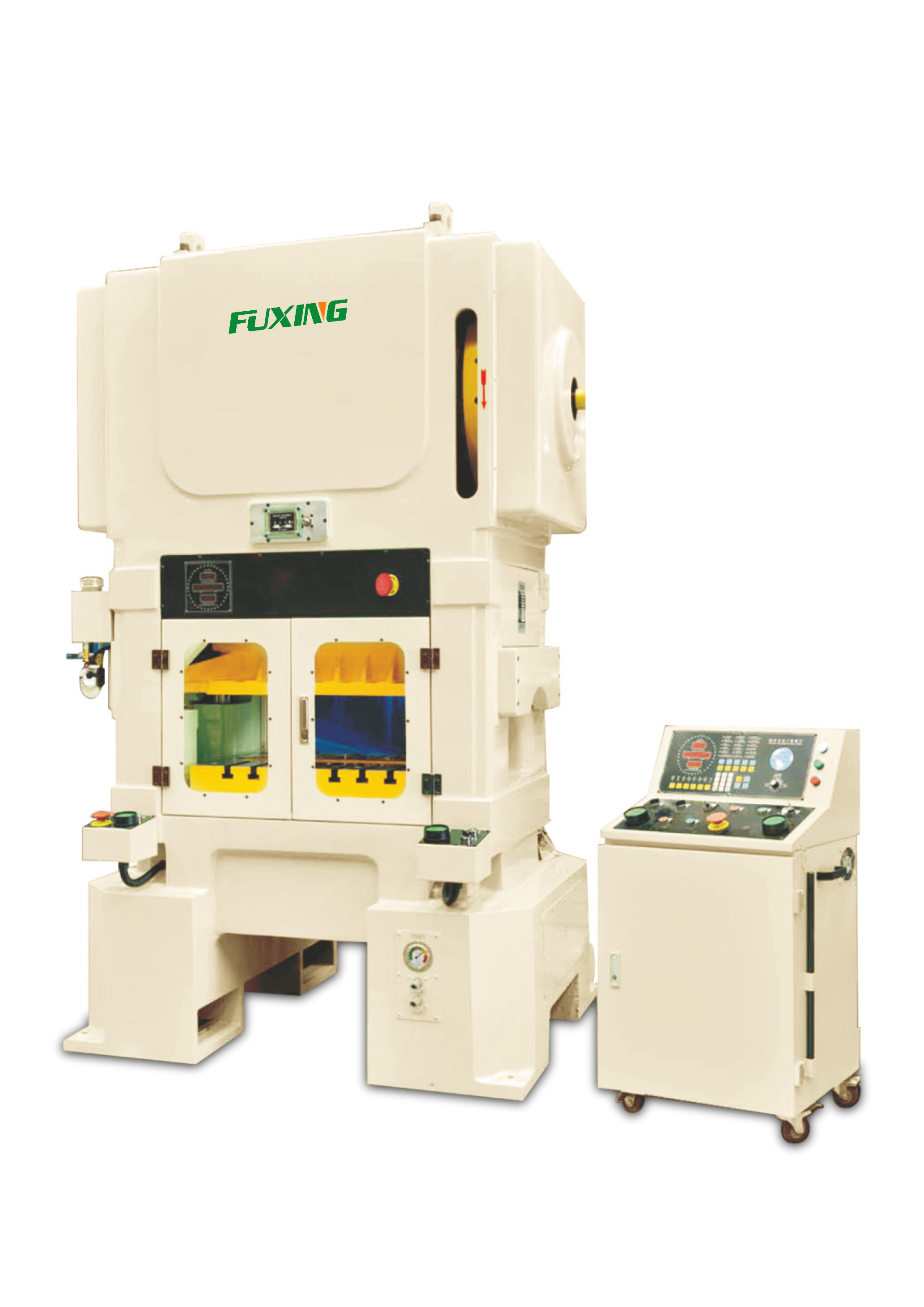
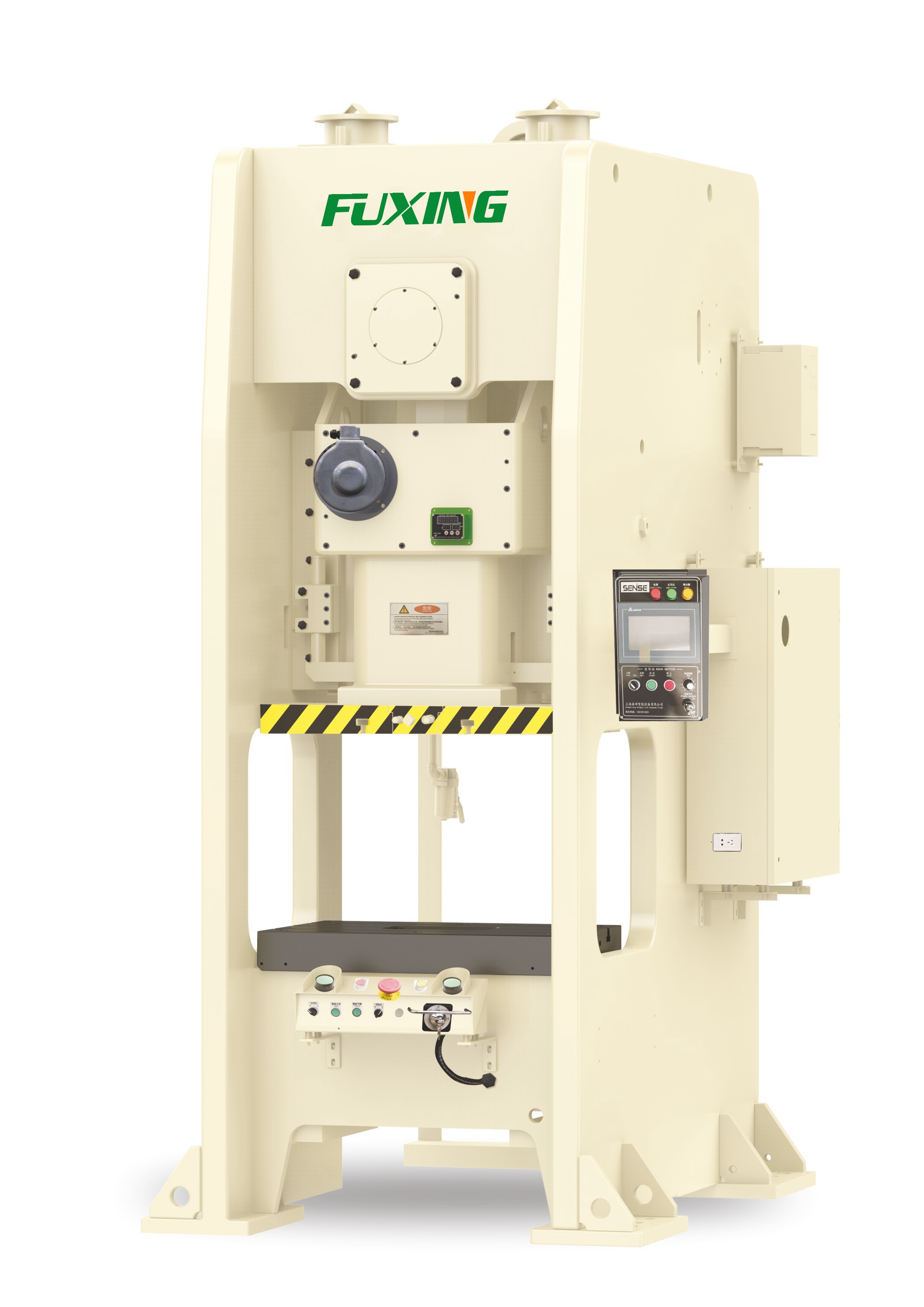
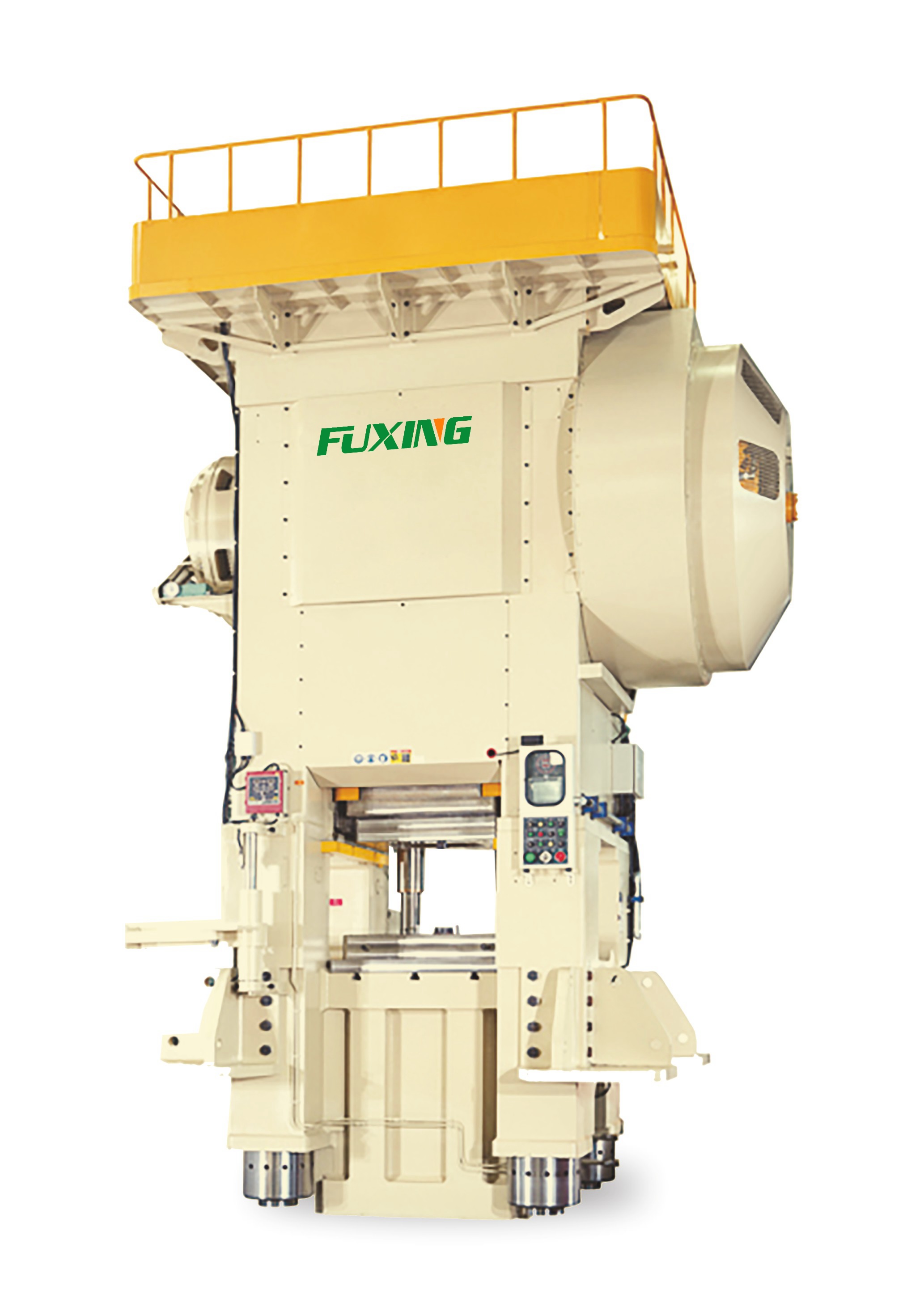
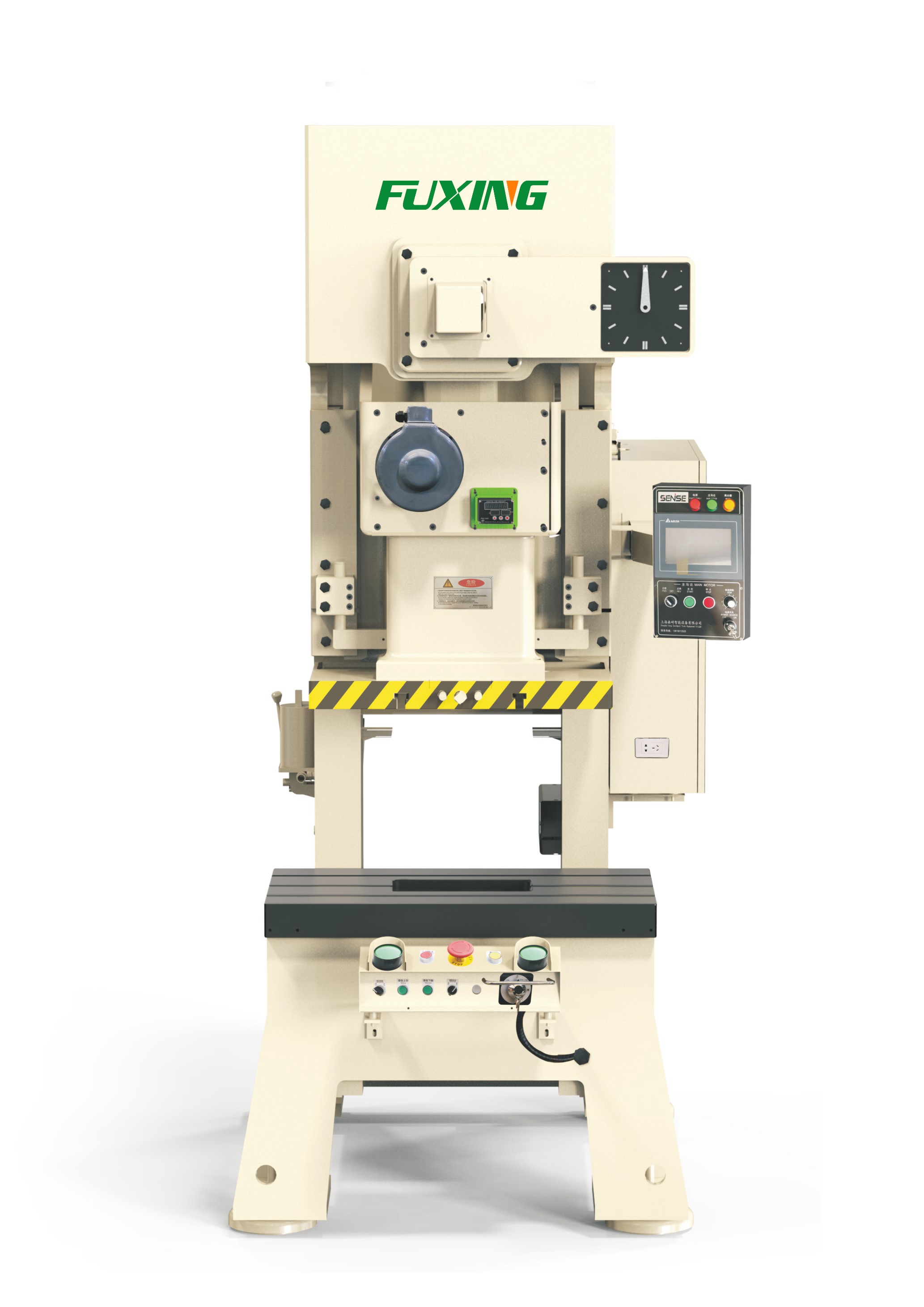
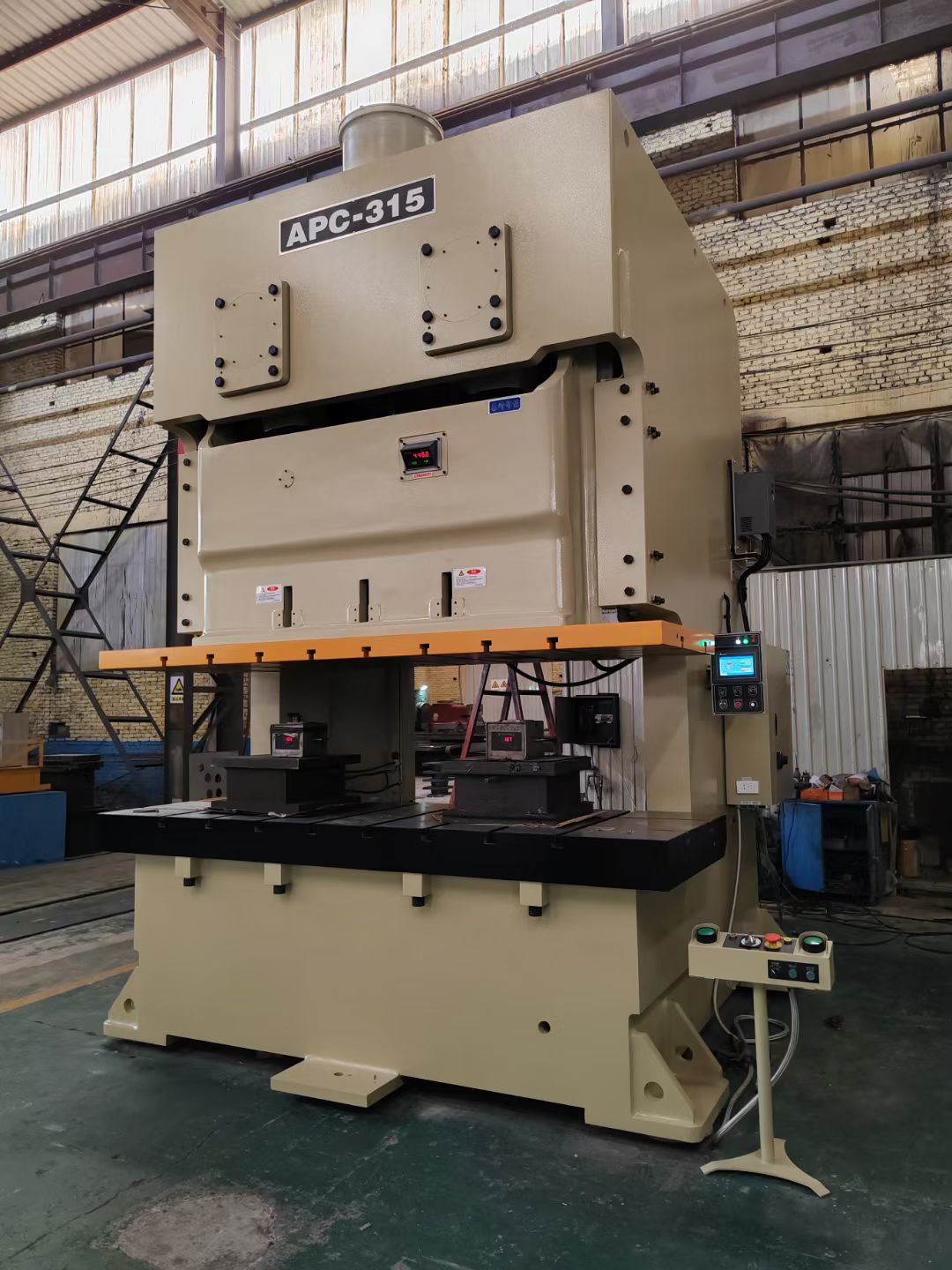
A pneumatic power press is a type of industrial press widely used in metal stamping applications. It uses compressed air to control the clutch and brake system, enabling the press to start, operate and stop.
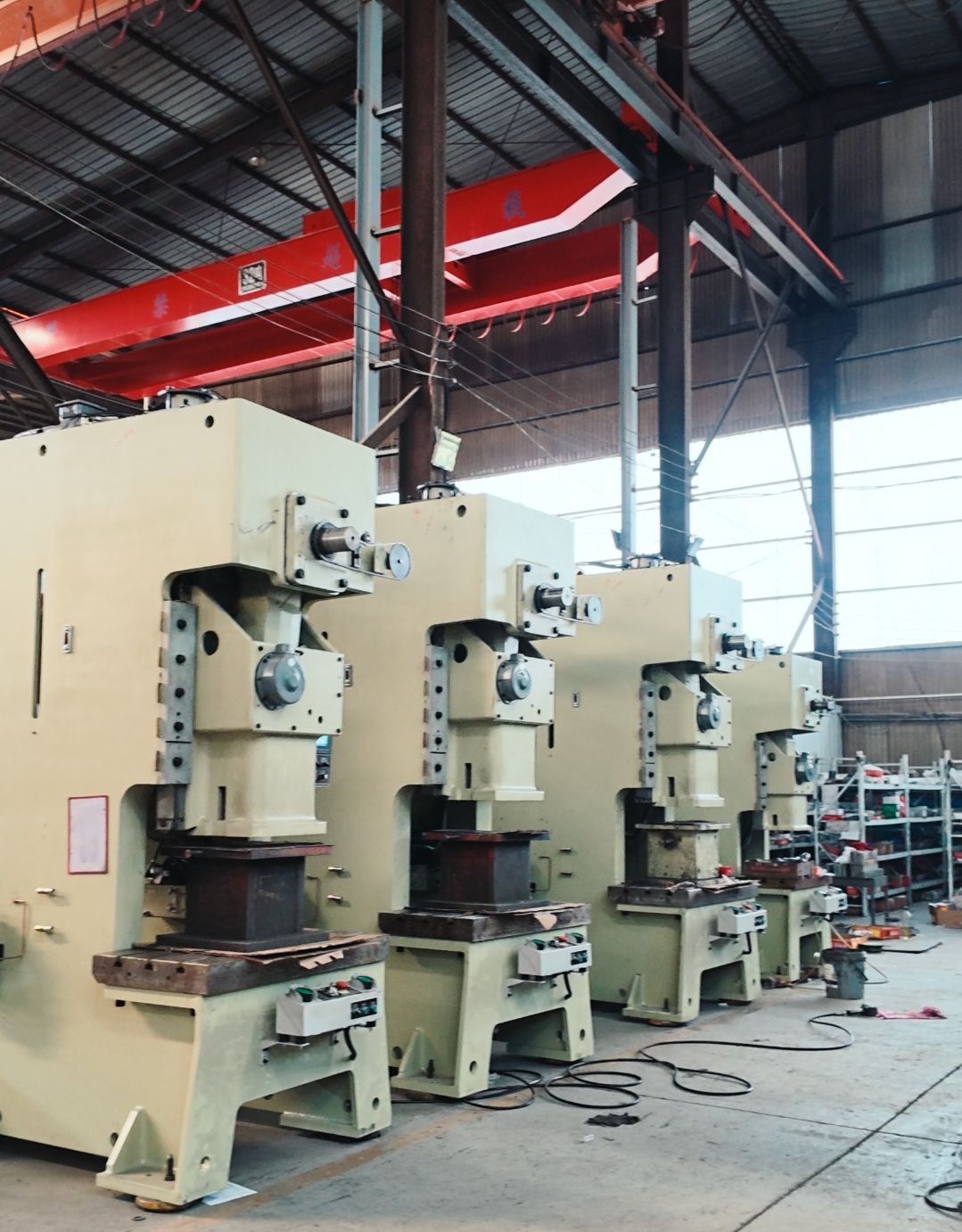
A conventional pneumatic power press generally consists of an electric motor, flywheel, crankshaft, connecting rod, slide, and pneumatic clutch-brake system.
During operation, the electric motor drives the flywheel, which stores rotational energy. When the press receives a working signal, the pneumatic clutch engages and transfers the energy stored in the flywheel to the crankshaft. The crankshaft and connecting rod then drive the slide up and down to complete stamping operations such as punching, blanking, bending and forming.
It is important to understand that a pneumatic power press does not directly generate stamping force through a pneumatic cylinder. In a conventional pneumatic clutch-driven power press, compressed air is mainly used to control the clutch and brake, while the actual stamping energy comes from the motor-driven flywheel.
This design combines the efficiency of mechanical transmission with the operational flexibility of a pneumatic clutch-brake system, making it widely used in various metal stamping applications.
2. Advantages of Pneumatic Power Presses
2.1 High Production Efficiency
Pneumatic power presses use a flywheel and crankshaft transmission system to achieve fast and continuous reciprocating stamping movements. They are suitable for high-volume metal stamping operations involving repetitive production.
When combined with automatic feeders, straighteners and progressive dies, they can form automated stamping production lines, reducing manual operations and improving overall production efficiency.
Typical applications include flat washers, fasteners, automotive components, electrical accessories and various metal hardware products.
2.2 Flexible Operation and Control
The pneumatic clutch and brake system allows flexible control of the press operating cycle.
Depending on the machine configuration, different operating modes are generally available, including inching, single-stroke and continuous-stroke operation.
These operating modes are convenient not only for daily production but also for die installation, adjustment and trial stamping.
2.3 Suitable for Automated Production
Pneumatic power presses offer good compatibility with automation systems. Depending on the product and production process, they can be integrated with servo feeders, straighteners, automatic loading devices, dies and automatic part collection systems.
For manufacturers producing identical metal components in large quantities over long periods, integrating the press with automation equipment can reduce manual intervention, improve production consistency and increase efficiency.
2.4 Stable Stamping Performance
A pneumatic power press with a well-designed structure, good frame rigidity and accurate slide guidance can maintain stable stamping performance during continuous production.
It is important to note that stamping accuracy does not depend solely on the clutch and transmission system. It is also closely related to frame rigidity, slide vertical accuracy, slide-to-worktable parallelism, machining and assembly quality, and die precision.
2.5 Relatively Convenient Maintenance
Compared with hydraulic presses, pneumatic power presses do not require a main hydraulic system to generate stamping force. Therefore, they do not have a complex main hydraulic oil circuit.
Routine maintenance mainly involves the mechanical transmission system, pneumatic clutch and brake, lubrication system and electrical control system.
Regular inspections, proper lubrication and standardized maintenance can help extend the service life of the machine.
3. Disadvantages of Pneumatic Power Presses
Although pneumatic power presses offer many advantages, they are not suitable for every stamping application.
3.1 Dependence on a Stable Compressed Air Supply
The pneumatic clutch and brake require a stable compressed air supply.
Insufficient air pressure, excessive moisture or contaminants in the compressed air may affect clutch engagement and braking performance.
Therefore, the production facility should be equipped with a suitable air compressor, air filtration system and pressure regulation equipment.
3.2 Relatively Fixed Slide Motion
Traditional crankshaft-driven pneumatic power presses generally have a fixed stroke length, and the slide movement is determined by the mechanical transmission structure.
Unlike servo presses, they cannot freely program the slide speed and motion profile throughout the entire stamping stroke.
As a result, their flexibility is relatively limited for certain products requiring special slide motion profiles or complex forming processes.
3.3 Noise and Vibration During Operation
During high-speed stamping, the mechanical transmission system operates continuously, while the contact between the die and material also generates impact forces. Therefore, the machine may produce a certain level of noise and vibration.
Actual noise and vibration levels depend on factors such as machine structure, stamping speed, die design and production process.
Proper foundation design, vibration isolation, regular maintenance and necessary noise-control measures can help improve the working environment.
3.4 Compressed Air Consumption
The pneumatic clutch and brake system consumes compressed air during operation.
For manufacturers engaged in long-term, high-volume continuous production, compressed air consumption is also part of the machine's operating costs.
Therefore, when selecting a press, it is important to consider not only the machine's energy consumption but also the operating efficiency of the factory's compressed air system.
4. Comparison Between Pneumatic Power Presses and Other Types of Press Machines
Different types of press machines use different driving and transmission systems. They differ significantly in production speed, stamping capabilities, motion control and suitable applications.
4.1 Pneumatic Power Press vs. Conventional Mechanical Press
Both machines generally use an electric motor, flywheel, crankshaft and connecting rod mechanism to generate stamping motion.
The main difference lies in their clutch and brake systems.
A conventional mechanical press may use a mechanical key clutch, while a pneumatic power press generally uses a pneumatic friction clutch and brake.
Compared with a traditional full-revolution mechanical clutch, a properly designed pneumatic clutch-brake system provides more flexible control over the operating cycle. When equipped with appropriate control and safety protection systems, it can support single-stroke operation, continuous operation and braking during a working cycle.
Pneumatic power presses are particularly suitable for production environments requiring frequent operation, automatic feeding and repetitive stamping.
4.2 Pneumatic Power Press vs. Hydraulic Press
A hydraulic press generates pressure through a hydraulic pump and uses pressurized oil to drive a hydraulic cylinder, converting hydraulic energy into mechanical force to complete the pressing operation.
The main advantage of a hydraulic press is its ability to provide controlled pressure throughout the working stroke. Depending on the hydraulic system, pressure, speed and holding time can be adjusted.
A pneumatic power press, on the other hand, uses a flywheel and crankshaft transmission system and is generally more suitable for high-speed, repetitive stamping operations.
Hydraulic presses are commonly used for deep drawing, thick-plate forming, straightening and applications requiring pressure control over a long working stroke.
Pneumatic power presses are more suitable for punching, blanking, bending, shallow drawing and high-volume metal stamping production.
4.3 Pneumatic Power Press vs. Servo Press
A servo press uses servo motors to control slide movement.
Compared with conventional crankshaft-driven presses, servo technology provides greater flexibility in controlling slide speed, motion profiles and stopping positions.
This makes servo presses suitable for production applications requiring advanced motion control, reduced forming impact or complex forming processes.
However, servo presses generally involve higher initial equipment investment, and their control systems are relatively sophisticated.
For manufacturers mainly engaged in conventional punching, blanking, bending and high-volume repetitive stamping, pneumatic power presses remain a practical and economical choice.
5. Comprehensive Comparison of Different Types of Press Machines
| Comparison | Pneumatic Power Press | Conventional Mechanical Press | Hydraulic Press | Servo Press |
|---|---|---|---|---|
| Main drive | Motor + flywheel + crankshaft | Motor + flywheel + crankshaft | Hydraulic pump + cylinder | Servo motor-driven mechanism |
| Clutch system | Pneumatic clutch-brake | Depends on machine configuration | No equivalent clutch structure | Servo drive control |
| Production speed | High | High | Generally lower | Adjustable |
| Slide motion | Generally fixed | Generally fixed | Adjustable | Programmable |
| Force characteristics | Determined by crank mechanism | Determined by crank mechanism | Controlled pressure throughout the working stroke | Depends on servo system and transmission structure |
| Automation capability | High | High | Can be automated | High |
| Initial investment | Moderate | Generally lower for basic models | Depends on machine configuration | Generally higher |
| Typical applications | Punching, blanking and metal stamping | General metal stamping | Deep drawing and heavy forming | Precision and complex forming |
Note: The above comparison describes the general characteristics of different press technologies. Actual performance depends on machine structure, tonnage, stroke, stamping speed, control system configuration and specific production processes.
6. How to Choose the Right Press Machine?
When selecting a press machine, manufacturers should not focus only on equipment prices or machine types. The decision should be based on actual production requirements.
6.1 Material Type and Thickness
Different metal materials have different strength and mechanical properties. Material type, sheet thickness and cutting perimeter directly affect the required stamping force.
When determining the required press tonnage, it is necessary to consider the material's shear strength, cutting perimeter, sheet thickness and an appropriate safety margin.
6.2 Production Speed Requirements
If the main products are flat washers, fasteners and various hardware components requiring high-volume continuous production, a crankshaft-driven pneumatic power press is generally a worthwhile option.
Especially when integrated with automatic feeding equipment, production efficiency can be further improved.
6.3 Product Shape and Processing Requirements
For conventional punching, blanking, bending and shallow drawing operations, mechanical transmission presses are generally suitable.
If the products require deep drawing, heavy forming or continuous pressure control over a longer working stroke, hydraulic presses may be a better choice.
6.4 Automation Requirements
If the production process involves continuous coil feeding, automatic loading, progressive die stamping or automatic part collection, compatibility between the press and automation equipment should be considered.
For example, a complete automated stamping production line generally includes a press, feeder, straightener, dies and automatic part collection equipment.
6.5 Stamping Precision Requirements
Machine frame rigidity, slide vertical accuracy, slide-to-worktable parallelism and die precision all affect the final product quality.
Therefore, when purchasing a press machine, manufacturers should not focus only on nominal tonnage. Machine manufacturing quality, assembly accuracy and actual testing results should also be carefully evaluated.
7. Conclusion
Pneumatic power presses combine the high efficiency of mechanical transmission with the operational flexibility of pneumatic clutch-brake systems. They offer significant advantages in high-volume and repetitive metal stamping production.
They are particularly suitable for stamping flat washers, fasteners, automotive components and various metal hardware products.
Of course, different types of press machines have different application ranges, and no single machine is suitable for every production process.
Hydraulic presses offer advantages in deep drawing and heavy forming, while servo presses provide more flexible control over slide motion. Pneumatic power presses, meanwhile, offer a good overall combination of efficiency, productivity and automation compatibility for conventional metal stamping applications.
Fuxing Machinery specializes in the manufacturing of pneumatic power presses, offering C-frame and H-frame structures, as well as single-crank and double-crank configurations.
From individual press machines to customized automated stamping production lines, we help customers select suitable stamping equipment and supporting solutions based on their product characteristics, material specifications, production efficiency and automation requirements.