Welcome to Shandong Fuxing Machinery Co., Ltd.
Punch Press Die Height Guide: From Basics to Selection
In metal stamping production, the punch press is the core equipment, and die height is an essential parameter on every machine’s specification sheet. Beginners or factory purchasers may find this term confusing, but it directly affects die installation, stamping accuracy, and production efficiency. This article provides a comprehensive guide to die height, helping you understand it from fundamentals to practical applications.
1. What is Die Height?
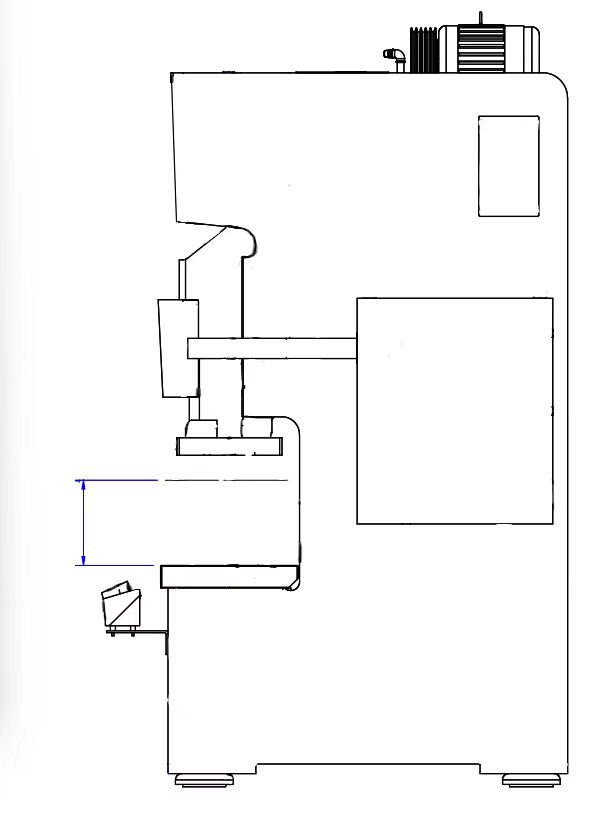
Die height, also known as shut height, is the vertical distance from the bottom of the slide to the lower worktable (or lower die mounting surface) when the slide is at the bottom dead center.
Simply put, die height determines the maximum die height that the punch press can accommodate. When the press is fully closed, the total height of the upper and lower dies cannot exceed the die height, otherwise the die cannot be installed or safely operated.
Die height is not just a number—it affects whether the press can handle the load, whether the die fits correctly, and whether the product dimensions are accurate.
2. History and Development of Die Height
Early mechanical presses had fixed die heights determined by their structure, limiting the height range of dies. With the development of industrial automation, die height adjustment mechanisms have evolved:
Manual slide adjustment: Early design requiring operators to adjust the slide with screws or wedges
Semi-automatic electric adjustment: Slide height controlled by a motor, improving adjustment efficiency
Automated servo adjustment: In modern high-end presses, the slide height can be precisely adjusted via a servo motor, supporting rapid die change in production lines
Advances in die height design improve production flexibility, reduce die change time, and enhance efficiency.
3. Components of Die Height
Die height is influenced not only by the press itself but also by die structure and adjustment devices:
(1)Upper die height: Vertical dimension of the die fixed on the slide
(2)Lower die height: Height of the die mounted on the worktable
(3)Shims or adjustment plates: Used to fine-tune die installation height
(4)Slide adjustment range: Vertical adjustment range provided by the press
For example, a press with a die height of 340 mm and an adjustment range of 80 mm allows the slide to move 40 mm up and down, accommodating dies with a total height of 300–380 mm. As shown in the diagram, the marked part indicates the die height of the punch press.
4. Die Height in Different Types of Presses
Punch presses can be categorized by power type: mechanical, pneumatic, and hydraulic. Their die height characteristics differ:
Mechanical press: Slide driven by a crank mechanism; die height is usually fixed but can be slightly adjusted with shims or screws. Suitable for high-speed continuous stamping.
Pneumatic press: Slide driven by compressed air; die height can be adjusted by the cylinder. Safe and suitable for light and medium-sized workpieces.
Hydraulic press: Slide driven by a hydraulic system; can achieve long strokes and large die height adjustment, suitable for deep drawing or thick plates.
Understanding these characteristics helps select the right press for your production process.
5. Die Height and Other Press Parameters
Die height is not isolated—it is closely related to the following parameters:
Stroke: The maximum slide movement must accommodate die height plus material thickness.
Throat depth: Affects horizontal installation space. Even if die height is sufficient, insufficient throat depth can limit large workpieces.
Nominal capacity (tonnage): Higher die height increases the lever arm, affecting required force.
Die thickness: Die height must exceed total die thickness for proper installation.
Considering these parameters together ensures compatibility between the press and the die and guarantees stamping quality.
6. Die Height in Die Design
Die height directly impacts die design:
Progressive dies: Die height must accommodate the total height of all stamping stations
Deep drawing dies: Taller dies require presses with higher die height
Adjustable dies: For multi-product lines, adjustable die height presses allow rapid die changes
Designers usually leave a small margin (5–10 mm) to prevent collisions during stamping.
7. Die Height Selection Tips
Select according to total die height: Ensure press die height + adjustment range ≥ total die height
Consider future process expansion: Choose slightly higher die height for potential taller dies
Check slide adjustment method: Manual, electric, or servo adjustments differ in convenience
Match tonnage and stroke: High die height but insufficient stroke can limit deep drawing operations
8. Maintenance and Precautions
Regularly check the slide and adjustment screws to prevent deviation
Keep lubrication system normal for smooth adjustment
Avoid die collisions during installation, especially for tall or multi-station dies
Periodically calibrate shut height to ensure stamping accuracy
9. Common Mistakes and Tips
Mistake 1: Higher die height is always better → Choose according to die height; too high increases machine size and cost
Mistake 2: Adjustment range can compensate indefinitely → Range is limited; die must fit within adjustment limits
Tip: Consider die height, throat depth, stroke, and tonnage together to ensure press and die compatibility
10. Conclusion
Die height is one of the most critical parameters of a punch press, affecting die installation, stamping accuracy, and production efficiency. Understanding die height, adjustment range, and related parameters is essential for press selection, die design, and production management.
When selecting a press:
Choose die height according to total die size
Allow adequate adjustment margin
Consider stroke, throat depth, and tonnage together
Regularly maintain slides and adjustment mechanisms
Mastering die height and its influencing factors ensures optimal press performance and safe, efficient production.
📌 For more professional punch press knowledge and buying guides: www.fuxingmachinery.com