Welcome to Shandong Fuxing Machinery Co., Ltd.
Press Tonnage Calculation: A Key Step for Smart Machine Selection
In the metal forming industry, press machines are among the most essential equipment. They handle a wide range of processes including punching, blanking, stretching, bending, and forming. Whether in hardware manufacturing, automotive parts, home appliance sheet metal, or electrical tray production, presses are ubiquitous.
For companies, selecting the right press tonnage is critical. It affects production efficiency, die life, and product quality.
Many manufacturers still rely on experience when choosing a press—looking at material thickness or hole size and estimating the tonnage needed. This approach carries significant risk and often results in undersized or oversized press selection.
Mastering press tonnage calculation is therefore essential. This article systematically introduces the concept, calculation principles, influencing factors, example calculations, and practical applications of press tonnage. It helps readers understand how to choose presses scientifically and efficiently.
1. What is Press Tonnage?
Press tonnage, usually measured in tons (t), refers to the maximum force a press ram can apply to a material during downward motion.
Its importance lies in:
Determining whether the press can complete the intended forming process;
Ensuring the die can withstand the punching force;
Affecting production efficiency and product accuracy.
Insufficient tonnage: The material may not be fully cut, resulting in severe burrs and potential die damage.
Excessive tonnage: While the operation succeeds, equipment costs increase, and die wear accelerates.
Therefore, accurate tonnage calculation is crucial for stable and cost-effective production.
2. The Basic Formula for Press Tonnage
The required punching force is essentially a shearing force, calculated as follows:
Where:
F: Punching force (N)
L: Shearing perimeter of the workpiece (mm)
t: Material thickness (mm)
τ: Material shear strength (N/mm²)
To convert to tons:
In practice, a safety factor (1.2–1.3) is applied to ensure operational reliability.
Simplified formula:
3. Factors Affecting Press Tonnage
Material Type (Shear Strength)
Carbon steel: ≈ 250 N/mm²
Stainless steel: ≈ 450 N/mm²
Aluminum alloy: ≈ 150 N/mm²
Copper: ≈ 200 N/mm²
→ Harder materials require higher tonnage.Material Thickness
Punching force increases proportionally with thickness. Doubling the thickness nearly doubles the required tonnage.Hole Shape and Size
Circular holes: minimal perimeter, lower tonnage required.
Square or oblong holes: longer perimeter, higher tonnage.
Irregular holes: approximate perimeter calculation may be needed.
Number of Holes Punched at Once
Total force = single-hole force × number of holes.
Multi-step punching can reduce tonnage requirements per stroke.
Die Clearance
Too small clearance → higher punching force, faster die wear.
Proper clearance (usually 5–10% of material thickness) reduces force and extends die life.
4. Example Calculation
Scenario: 2mm thick galvanized steel plate, punching 25mm × 9.2mm oblong holes, 24 holes at once.
Calculate perimeter:
Shear area:
Single-hole punching force:
Total force for 24 holes:
Apply safety factor:
✅ Recommendation: A 100-ton press should be used.
5. Practical Considerations
Allow Reasonable Margin
Press tonnage should exceed the calculated value but not excessively. A 20–30% margin is usually sufficient.Avoid Overload
Continuous operation near maximum tonnage accelerates wear on press components.Optimize Die Design
Proper die clearance reduces punching force and extends die life.Step Punching and Multi-Station Dies
For large or complex parts, step punching or multi-station dies can reduce tonnage per stroke.Integration with Feed Systems
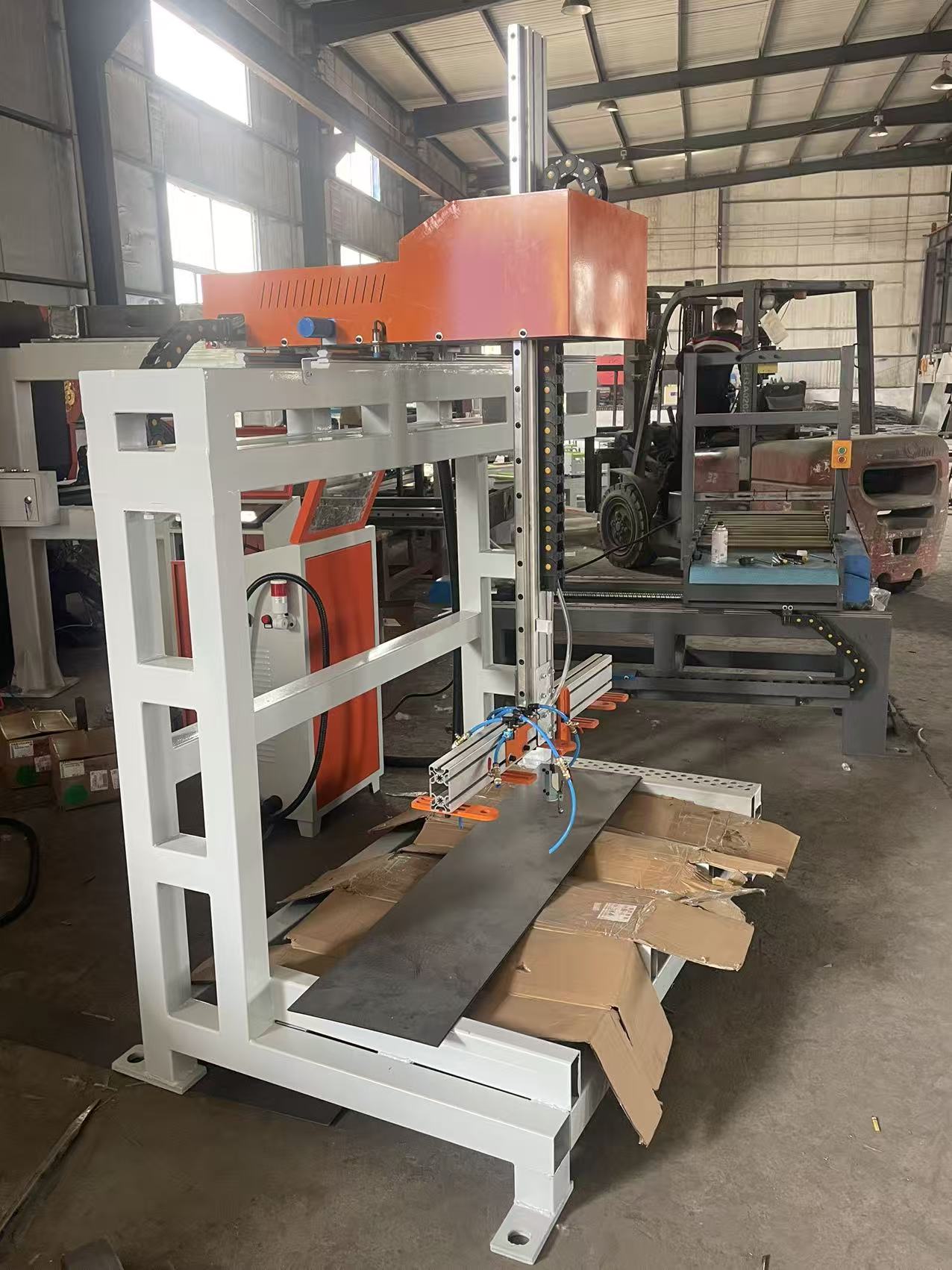
In automated production, feed systems should be selected based on tonnage and process requirements.
6. Value of Press Tonnage Calculation
Die Design
Early-stage calculation ensures die strength is sufficient, preventing cracks or failure.Equipment Procurement
Accurate tonnage calculation provides a scientific basis for selecting presses, avoiding waste or underpowered machines.Production Management
Enables proper scheduling and load distribution, improving press utilization.Cost Control
Optimized selection reduces energy consumption, maintenance costs, and die replacement frequency.
7. Conclusion
While press tonnage calculation may seem simple, it directly affects production stability, die life, and equipment investment return.
Too small: incomplete cuts, severe burrs, die damage.
Too large: high cost, increased energy use, accelerated die wear.
By combining material type, thickness, hole shape, number of holes, and die clearance, manufacturers can scientifically determine the required press tonnage, ensuring efficient, economical, and reliable production.
👉 For more knowledge about presses and dies, or to explore complete metal stamping solutions, visit www.fuxingmachinery.com. Our professional team provides expert press equipment and technical support to help your business achieve higher productivity.