Welcome to Shandong Fuxing Machinery Co., Ltd.
What Is Hot Stamping? A Complete Guide to the Technology, Benefits, and Applications
With the rapid development of lightweight vehicle structures, higher safety standards, and the widespread use of ultra-high-strength steel, traditional cold stamping processes can no longer meet the requirements for complex and high-strength structural parts. Against this background, Hot Stamping (also known as Hot Forming or Press Hardening) has become one of the most important advanced metal forming technologies in modern manufacturing.
As a professional manufacturer of mechanical power presses and integrated metal forming solutions, Fuxing Machinery provides high-rigidity presses, automated stamping lines, and customized production systems for hot stamping applications, helping customers achieve stable, efficient, and safe production.
1. What Is Hot Stamping?
Hot Stamping is a forming process in which steel sheets (mainly boron steel) are heated to the austenitizing temperature (typically around 850–930°C), then rapidly transferred into a forming die for stamping and simultaneous quenching. This process enables the material to transform into martensite, achieving ultra-high strength levels of 1,500 MPa or more.
Compared with conventional cold stamping, hot stamping allows:
One-step forming of complex structures
Significantly improved strength and crash performance
Almost zero springback
This makes it ideal for manufacturing safety-critical structural components.
2. Standard Hot Stamping Process Flow
A typical hot stamping production line includes the following steps:
1️⃣ Heating
Steel blanks are heated in a roller hearth furnace or chamber furnace to the austenitizing temperature.
2️⃣ Transfer
Robots or automated handling systems rapidly move the heated blanks into the forming die, usually within 5–8 seconds to prevent excessive heat loss.
3️⃣ Forming and Quenching
The part is formed inside a water-cooled die while being rapidly cooled, locking in the desired microstructure and mechanical properties.
4️⃣ Trimming and Post-Processing
Laser cutting, piercing, and deburring operations are performed to achieve the final part geometry.
👉 In this process, high-rigidity mechanical power presses with stable slide accuracy and excellent automation compatibility are essential for ensuring part quality and cycle efficiency.
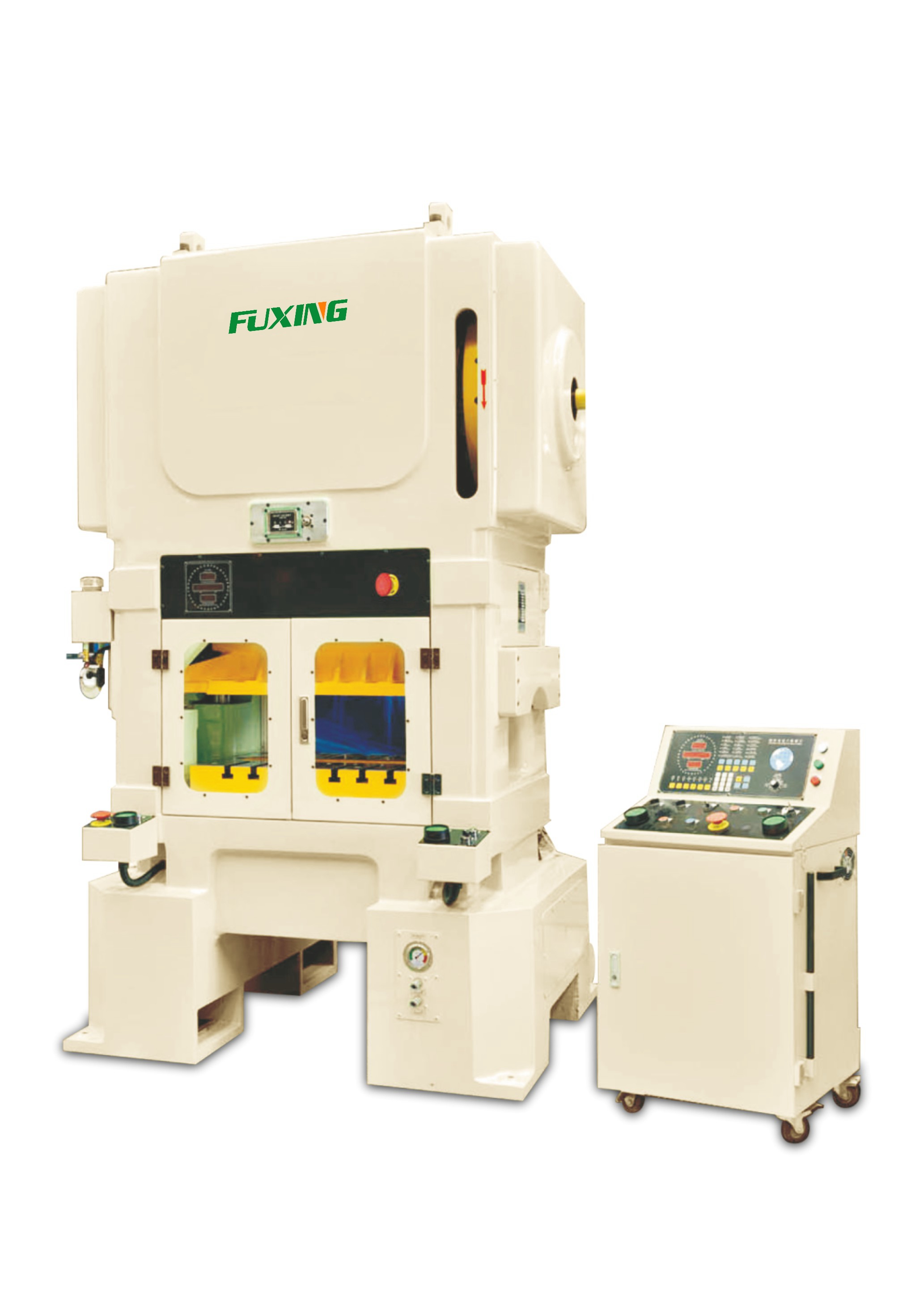
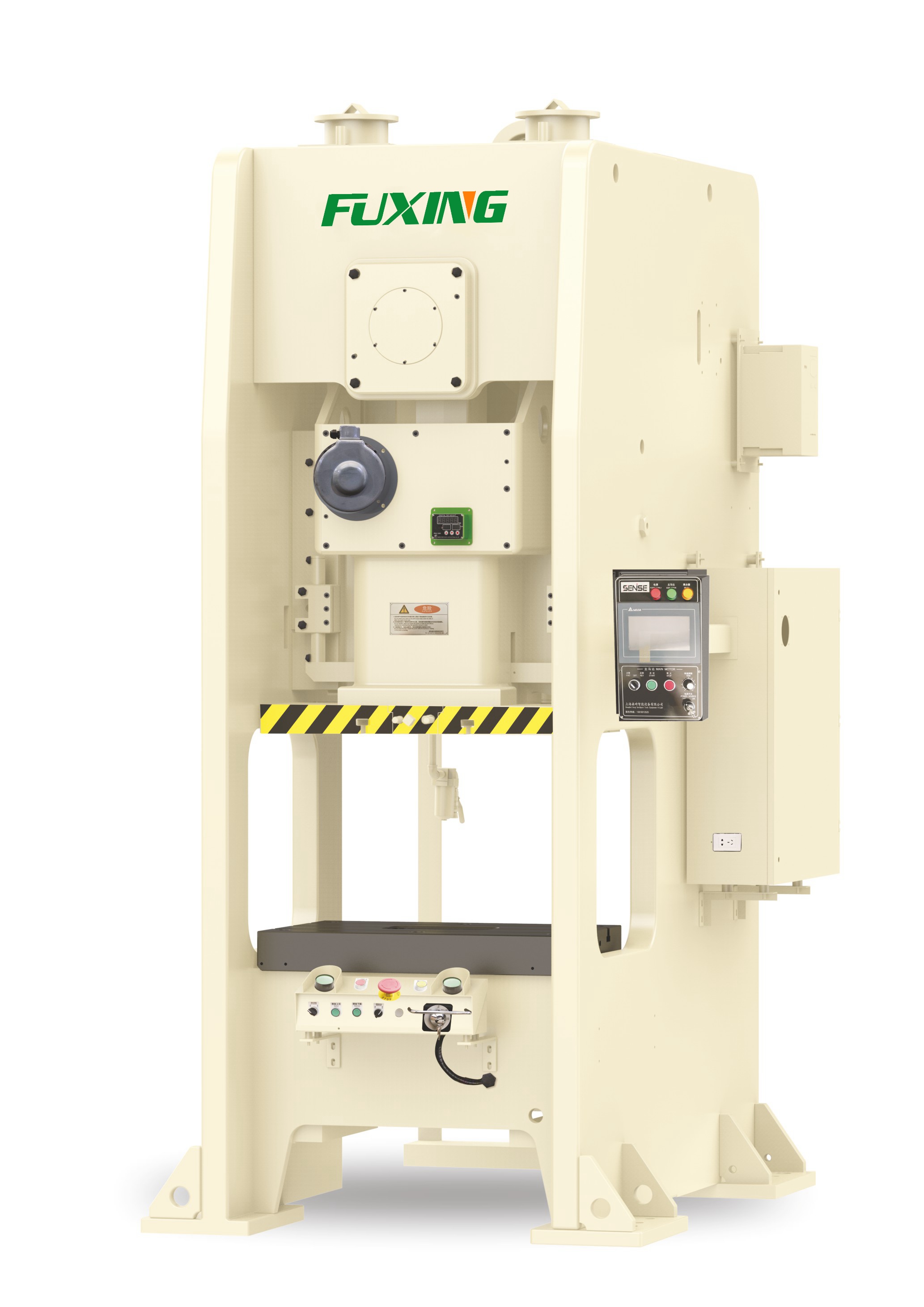
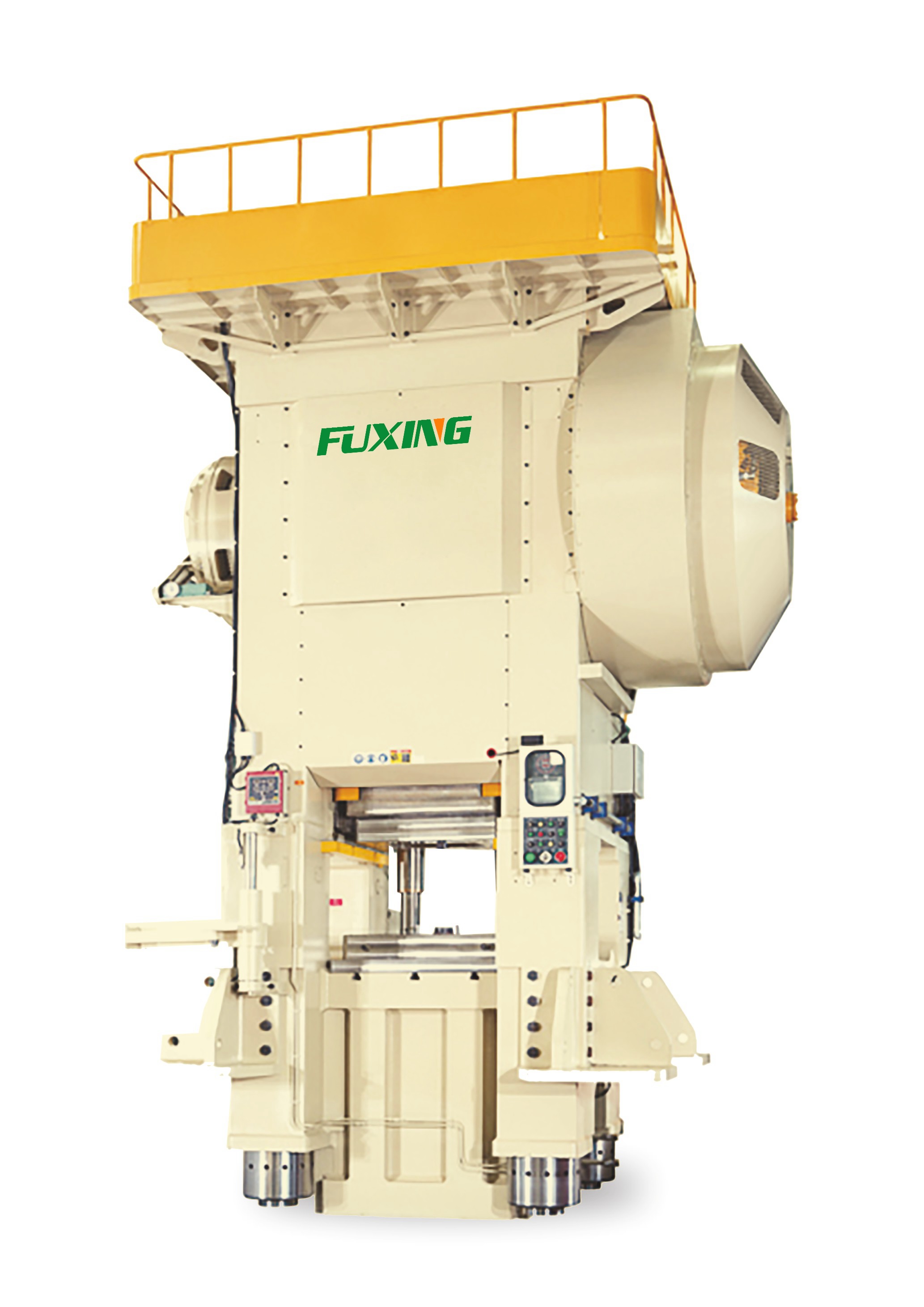
Fuxing Machinery supplies open-type, straight-side (H-frame), and multi-station mechanical presses specifically designed for hot stamping environments, with full compatibility for furnaces, robots, and cooled die systems.
3. Materials Used in Hot Stamping
Common materials for hot stamping include:
22MnB5 boron steel (most widely used)
Aluminum-silicon coated steel
Advanced galvanized hot forming steels
After hot stamping, tensile strength can increase from approximately 500–600 MPa to 1,500 MPa or higher, achieving both lightweight design and exceptional structural performance.
4. Hot Stamping Production Line Equipment
(With Integrated Solution Recommendations)
A complete hot stamping production line typically consists of:
🔥 Heating furnace systems (roller hearth or chamber furnaces)
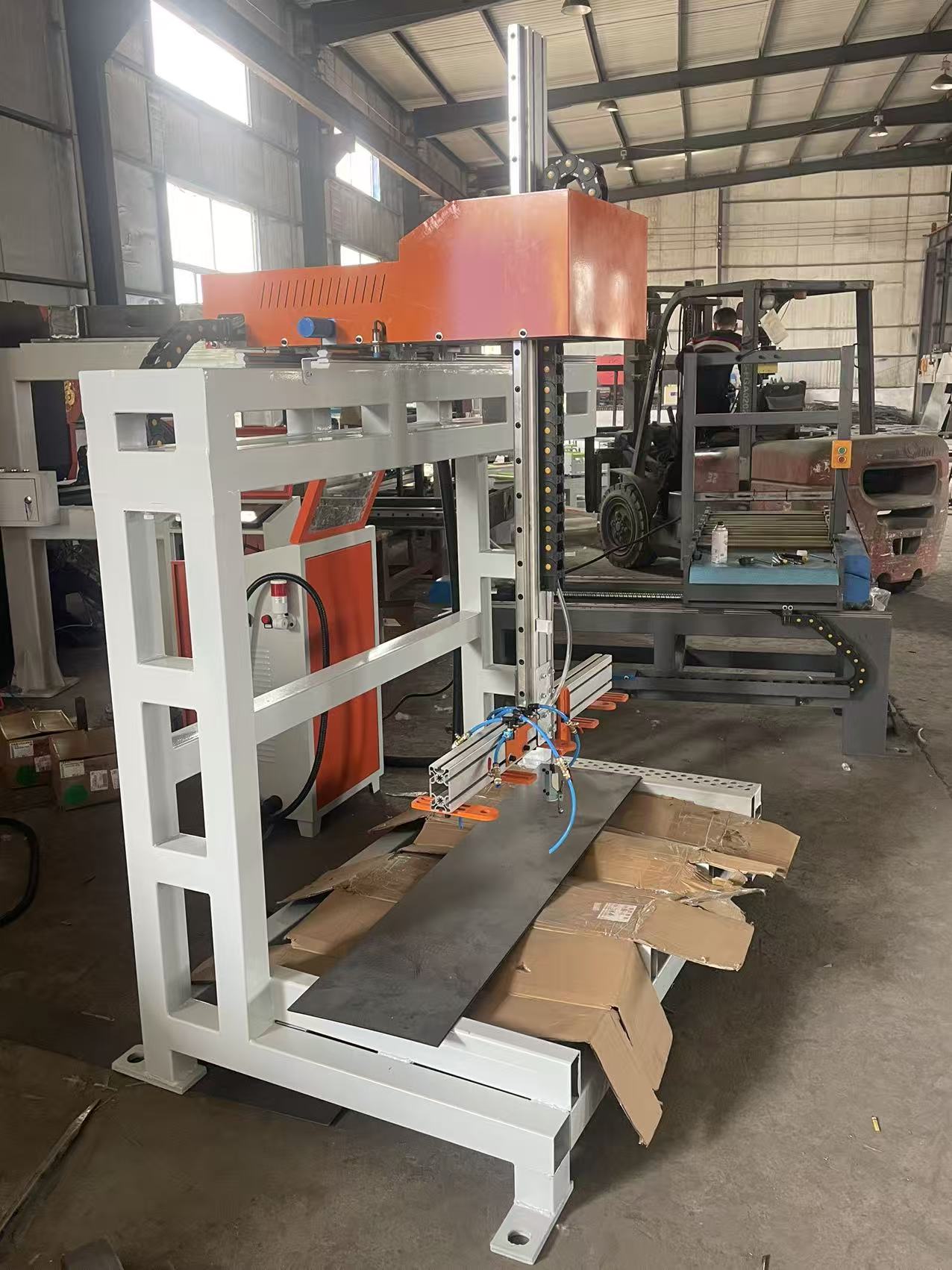
🤖 Automated loading and unloading robots
⚙️ High-rigidity mechanical presses, servo presses, or hydraulic presses
❄️ Water-cooled die systems
✂️ Laser trimming or secondary processing equipment
🖥️ Intelligent monitoring and MES interface systems
👉 Fuxing Machinery provides turnkey hot stamping solutions, from single press units to fully automated production lines, including equipment selection, cycle time design, die interface standardization, automation integration, and on-site commissioning — especially for automotive structural parts, construction machinery, and ultra-high-strength steel components.
5. Hot Stamping vs. Cold Stamping
| Comparison Item | Hot Stamping | Cold Stamping |
|---|---|---|
| Forming Temperature | ~900°C (hot forming) | Room temperature |
| Final Strength | ≥1,500 MPa | Typically ≤800 MPa |
| Springback | Almost zero | Significant |
| Forming Complexity | Complex parts in one step | Multiple forming steps |
| Equipment System | High-rigidity press + automation line | Conventional press |
👉 For manufacturers seeking stable, high-volume, and repeatable production, high-rigidity mechanical presses combined with automated hot stamping lines represent one of the most cost-effective and scalable solutions.
6. Key Advantages of Hot Stamping
✅ Ultra-high strength and superior crash safety
✅ Significant lightweighting potential
✅ Excellent dimensional accuracy and minimal springback
✅ Enables part consolidation and structural integration
✅ Well suited for automation and mass production
7. Typical Applications
🚗 Automotive Industry
A-pillars and B-pillars
Side impact beams
Door reinforcement beams
Structural chassis components
🏭 Rail Transit and Construction Machinery
High-load structural supports
Protective structural components
👉 For these applications, Fuxing Machinery delivers customized tonnage selection, high-speed cycle designs, automated handling systems, and multi-station press solutions, supporting customers from process validation through full-scale production.
8. Common Hot Stamping Line Configurations
Single-station hot stamping cells
Multi-station automated hot forming lines
Robot transfer hot stamping systems
Fully enclosed intelligent production cells
Typical production cycle times range from 10 to 20 seconds per part, enabling large-scale mass production.
9. Technology Development Trends
🔹 Materials: Higher strength grades and improved coating compatibility
🔹 Equipment: Servo-driven systems, higher rigidity, intelligent control
🔹 Processes: Tailored properties (local soft/hard zones), multi-material forming
🔹 Production: Flexible manufacturing, unmanned cells, and digitalized lines
👉 Future hot stamping production will increasingly rely on the deep integration of high-precision mechanical presses, intelligent automation systems, and digital process control platforms.
10. Conclusion: Hot Stamping Is Reshaping High-Strength Metal Forming
Hot stamping has become a core technology for achieving lightweight structures, superior safety, and ultra-high mechanical performance in advanced manufacturing. As materials, equipment, and automation continue to evolve, hot stamping is transitioning from standalone processes toward fully integrated, intelligent production systems.
As a professional manufacturer of mechanical power presses and integrated metal forming solutions, Fuxing Machinery offers:
✅ Hot stamping dedicated mechanical presses
✅ Automated stamping production lines and turnkey factory planning
✅ Die interface standardization and cycle optimization
✅ Global project experience across the Middle East, Southeast Asia, and beyond
📌 Visit: www.fuxingmachinery.com
to explore customized hot stamping press and production line solutions for your projects.