Welcome to Shandong Fuxing Machinery Co., Ltd.
Straight-Side Presses– A Comprehensive Overview
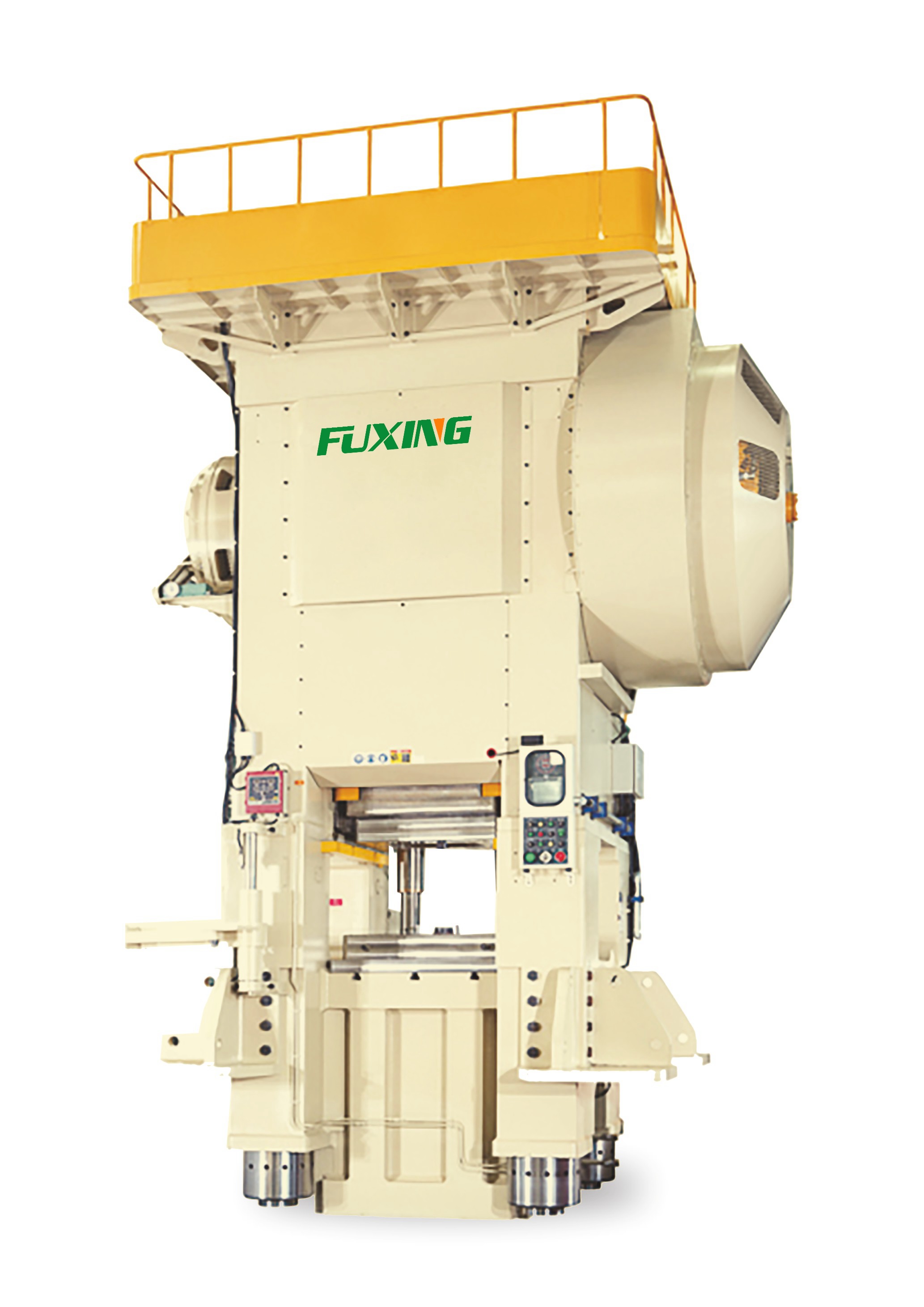
In modern manufacturing, press machines are essential equipment for metal forming and processing. From punching, deep drawing, and assembly to precision forming, high-performance presses play a critical role. Among them, straight-side presses, also known as H-frame presses, are widely favored for their excellent rigidity and stability, making them the preferred choice for high-tonnage and high-precision operations.
1. What is a Straight-Side Press?
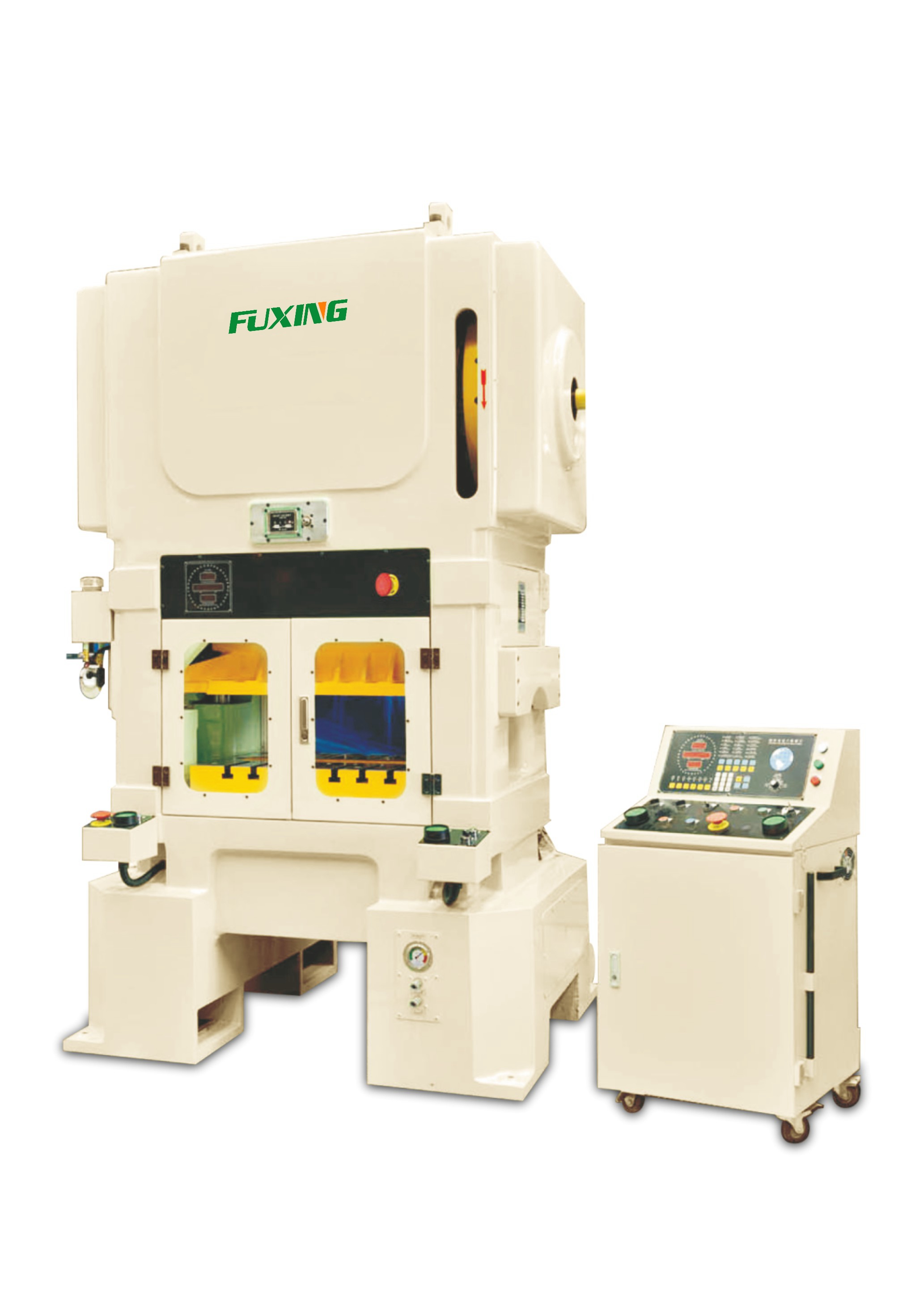
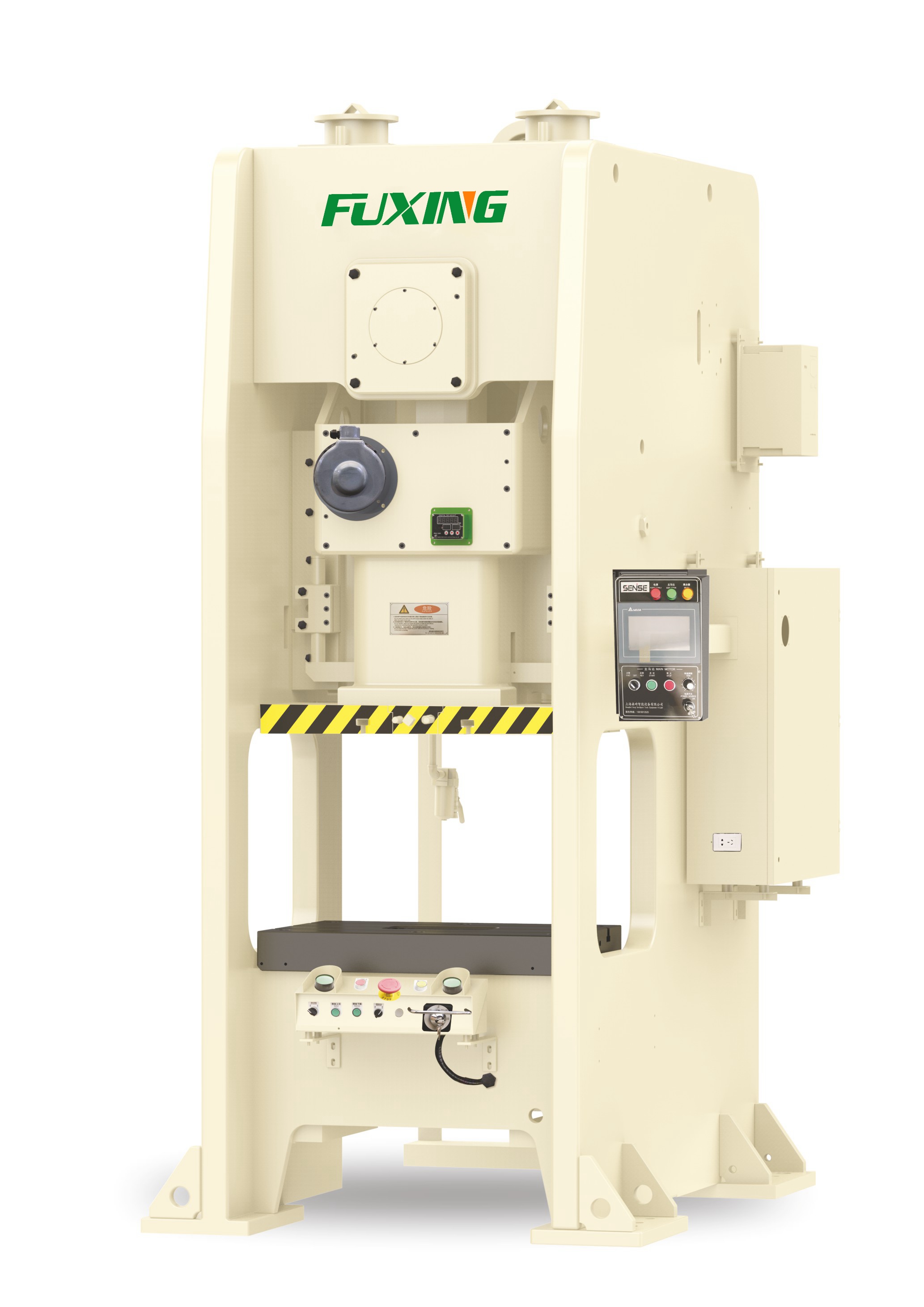
A straight-side press is a type of press machine characterized by a robust frame structure. Its upper and lower beams are connected by two or more parallel columns, forming a strong “H-shaped” frame. Unlike open C-frame presses, straight-side presses enclose the working area with columns, keeping the die perfectly aligned during operation for high-precision stamping.
In simple terms, if we compare press machines to human arms, C-frame presses are like operating with one arm extended, while straight-side presses operate like using both arms to hold the workpiece, providing superior stability and accuracy.
2. Key Components of a Straight-Side Press
A typical straight-side press consists of the following components:
Columns
Two or four high-strength steel columns connect the upper and lower beams, providing the core rigidity and stability needed for precise stamping.Beams
The upper and lower beams form the horizontal support of the “H” frame. The upper beam usually houses the slide, while the lower beam supports the worktable.Slide (Platen)
Mounted on the upper beam, the slide moves up and down via mechanical or hydraulic drives to perform stamping operations.Bed (Worktable)
The lower beam supports the bed, where the die and workpiece are secured and the stamping force is applied.Drive System
Straight-side presses can be driven mechanically, electrically, or hydraulically to ensure precise control of stamping force and stroke.Die Installation System
Supports and secures various dies, including deep-drawing dies, punching dies, and assembly dies.
3. Advantages of Straight-Side Presses
The H-frame design provides multiple industrial advantages:
High Rigidity and Stability
The H-frame ensures that the press maintains perfect parallelism and precision even under high-tonnage operations, especially suitable for deep drawing or thick metal stamping.High Precision
The columns guide the upper and lower dies accurately, reducing die wear and ensuring consistent product quality.Wide Application Range
Straight-side presses are suitable for a wide range of operations, from metal forming and assembly to deep drawing and precision stamping.Enhanced Safety
With the working area enclosed by columns, workpieces and dies remain stable, improving operator safety.Durability and Low Maintenance
Constructed from high-strength steel with precision machining, H-frame presses are robust, long-lasting, and cost-efficient to maintain.
4. Straight-Side Press vs. C-Frame Press
The main differences between straight-side (H-frame) presses and C-frame (open-frame) presses are:
Frame Structure
Straight-side presses have an H-frame with side columns;
C-frame presses have a C-shaped frame open on one side.
Rigidity
Straight-side presses have high rigidity, suitable for heavy-tonnage operations;
C-frame presses have moderate rigidity, suitable for medium and small tonnage.
Stamping Precision
Straight-side presses offer high precision, with stable die alignment;
C-frame presses have moderate precision and may produce die misalignment.
Application Range
Straight-side presses are suitable for deep drawing, precision stamping, and assembly;
C-frame presses are suitable for general punching and light stamping.
Footprint
Straight-side presses occupy a larger area;
C-frame presses occupy less space.
Maintenance Costs
Straight-side presses have low maintenance costs due to stable structure;
C-frame presses have relatively higher maintenance costs and may experience uneven die wear.
5. Applications of Straight-Side Presses
Straight-side presses are widely used across industries:
Automotive
Body panels, chassis parts, and high-strength steel stamping.Home Appliances
Washing machine cabinets, refrigerator inner liners, air conditioner housings.Aerospace
Deep-drawn and precision-formed high-strength metal parts.Hardware & Electronics
Metal housings and precision component stamping.Heavy Machinery Manufacturing
Thick plates and steel structural parts stamping and forming.
6. Key Considerations When Selecting a Straight-Side Press
When choosing a straight-side press, consider:
Tonnage
Select appropriate stamping force based on material and thickness to prevent overloading or inefficiency.Slide Stroke and Speed
Stroke determines the maximum workpiece size; speed affects production efficiency.Die Compatibility
Ensure the machine accommodates current and future die setups.Drive Type
Mechanical drives are ideal for high-speed continuous production, while hydraulic drives provide controlled pressure for precision forming.Brand & After-Sales Service
High-quality brands offer better precision, stability, and comprehensive after-sales support.
7. Maintenance Tips
Proper maintenance ensures long-term high-efficiency operation:
Regular Lubrication
Lubricate slide guides, columns, and drive systems regularly.Check Fasteners
Inspect bolts and nuts to prevent loosening.Clean Working Area
Remove metal scraps and oil to maintain precision and safety.Monitor Drive Systems
Check hydraulic or electrical systems, oil levels, and pressures regularly.Periodic Calibration
Calibrate slide alignment and stamping force for sustained precision.
8. Conclusion
Straight-side presses (H-frame presses) are a cornerstone of modern industrial production due to their high rigidity, precision, and suitability for heavy-duty operations. Whether in automotive, home appliances, aerospace, or hardware manufacturing, H-frame presses provide stable performance and accurate stamping results, ensuring productivity and product quality.
Compared with C-frame presses, straight-side presses are better suited for high-precision, high-tonnage, and deep-drawing applications, making them a smart choice for industrial metal forming.
💡 Tip: For more high-performance straight-side presses and H-frame press solutions, visit: www.fuxingmachinery.com