Welcome to Shandong Fuxing Machinery Co., Ltd.
How to Choose the Right Punching Press? Comprehensive Guide on Tonnage, Dies, and Materials (Punchin
Punching presses are essential equipment in the metal processing industry. Choosing the right press can improve production efficiency, extend die life, and ensure safety. This article provides a scientific selection guide from three aspects: tonnage calculation, die matching, and material selection.
1. Punching Press Tonnage Calculation: Accurately Meet Pressing Requirements
Tonnage refers to the maximum pressure a punching press can exert. When selecting a press, accurately calculating the punching force is key to avoid equipment failure or die damage.
Punching force calculation formula:
T: Material thickness (mm)
L: Punching perimeter (mm)
K: Material shear strength (N/mm²)
For example, punching a 700×500 mm square hole on 1mm thick cold-rolled steel with a shear strength of 330 N/mm² requires approximately 79.2 tons of force.
In addition, hold-down force is about 30% of the punching force, and forming processes require calculating forming force as well. It’s recommended to reserve about 20% safety margin when choosing tonnage.
2. Die Selection and Press Matching: Ensure Quality Pressing
Dies determine the pressing quality, so proper matching with the press is crucial.
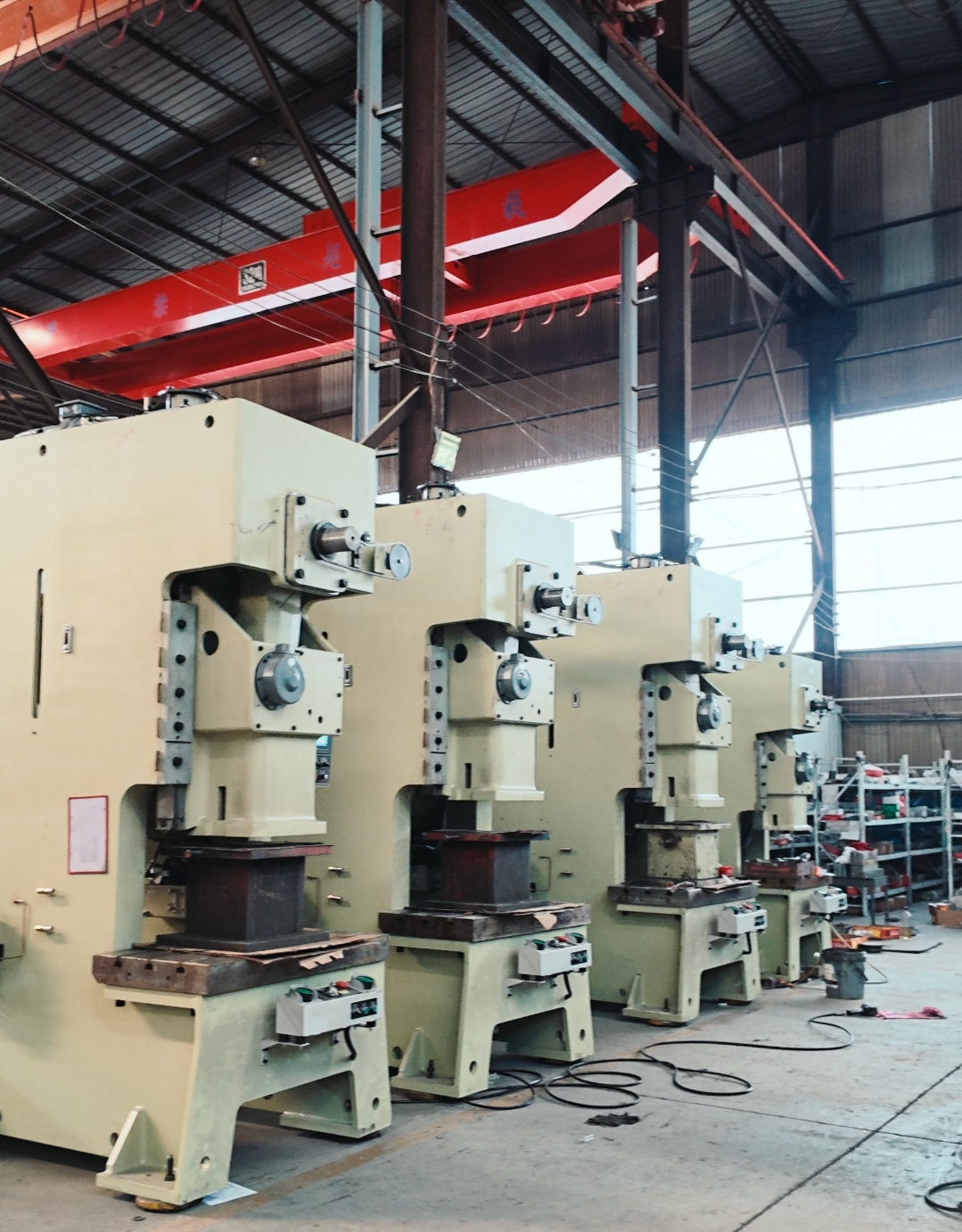
Open frame presses are suitable for small to medium parts, with three sides open for easy die installation.
Die size should be at least 3 times the material thickness to avoid uneven stress.
Rectangular dies should have a length-to-width ratio no greater than 10 to prevent breakage.
The die’s closed height should fall between the press’s maximum and minimum closed height to ensure smooth operation.
Adjust the worktable size according to die dimensions.
3. Material and Die Material Matching
Material hardness directly affects die life and press load.
Low-carbon tool steel (T10A) suits low wear resistance needs and is cost-effective.
High-carbon chromium steel (Cr12, Cr12MoV) is ideal for mass production due to high wear resistance.
New steel types (such as D2) offer both toughness and wear resistance, suitable for complex dies.
Cemented carbide is used for ultra-high volume production, with excellent wear resistance but difficult machining.
Proper heat treatment enhances die performance and lifespan.
4. Comprehensive Selection Advice
When choosing a punching press, consider:
Production needs: Select tonnage and stroke based on product size, material, and process.
Equipment performance: Prioritize mature technology and stable performance.
Cost-effectiveness: Balance purchase cost and operational costs.
Safety: Ensure the press has complete safety protection devices.
Environmental and energy efficiency: Choose presses with low noise and energy consumption.
Contact Us — Fuxing Machinery
Need professional guidance on punching press selection? Contact Fuxing Machinery. We provide customized, efficient, and reliable punching press solutions to help your business boost production efficiency and produce high-quality products.